


-


7-Segment 7x1 VFD Glass / 3.3Vac Green Display
Model: D0107LT-33-0701A
Contorno: 98 mm x 33 mm
kr212,52NÃO DISPONÍVEL EM ESTOQUE -



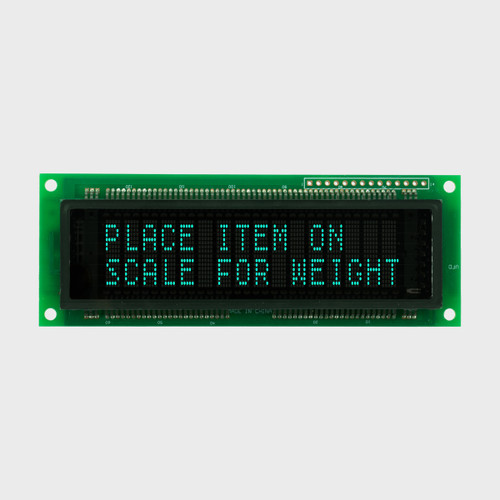
16x2 Dot Matrix Module VFD / 5.0V Green Display with PT6314 Controller
Model: M0216SD-162SDAR8
Contorno: 84 mm x 44 mm
kr547,22NÃO DISPONÍVEL EM ESTOQUE -
Módulo de matriz de pontos 16x2 VFD / Ecrã azul-verde de 5,0 V
Model: M0216MD-162MDBR2-J
Contorno: 122 mm x 44 mm
kr576,72EM ESTOQUE -



20x2 Compact Dot Matrix Module VFD / 5.0V Green Display with PT6314 Controller
Model: M0220SD-202SDAR1
Contorno: 116 mm x 37 mm
kr493,35EM ESTOQUE -

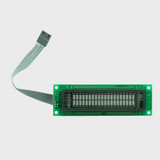
Módulo VFD de matriz de pontos 20 x 2 / Ecrã verde de 5,0 V com cabo série de 5 pinos
Model: M0220SD-202SDAR1-S
Contorno: 116 mm x 37 mm
kr591,47EM ESTOQUE -
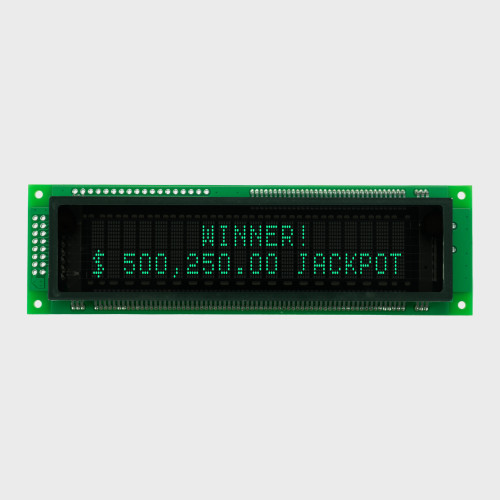
20x2 Dot Matrix Module VFD / 5.0V Green Display with PT6314 Controller
Model: M0220MD-202MDAR1-3
Contorno: 146 mm x 43 mm
kr547,22EM ESTOQUE
Visores VFD
Vivid, High-Brightness VFD Displays for Demanding Environments
Achieve crisp, glowing visuals with our vacuum fluorescent displays. Known for their high brightness, wide temperature range, and long life, VFDs deliver reliable visibility and performance where durability and readability matter most, from industrial controls to high-end instrumentation.
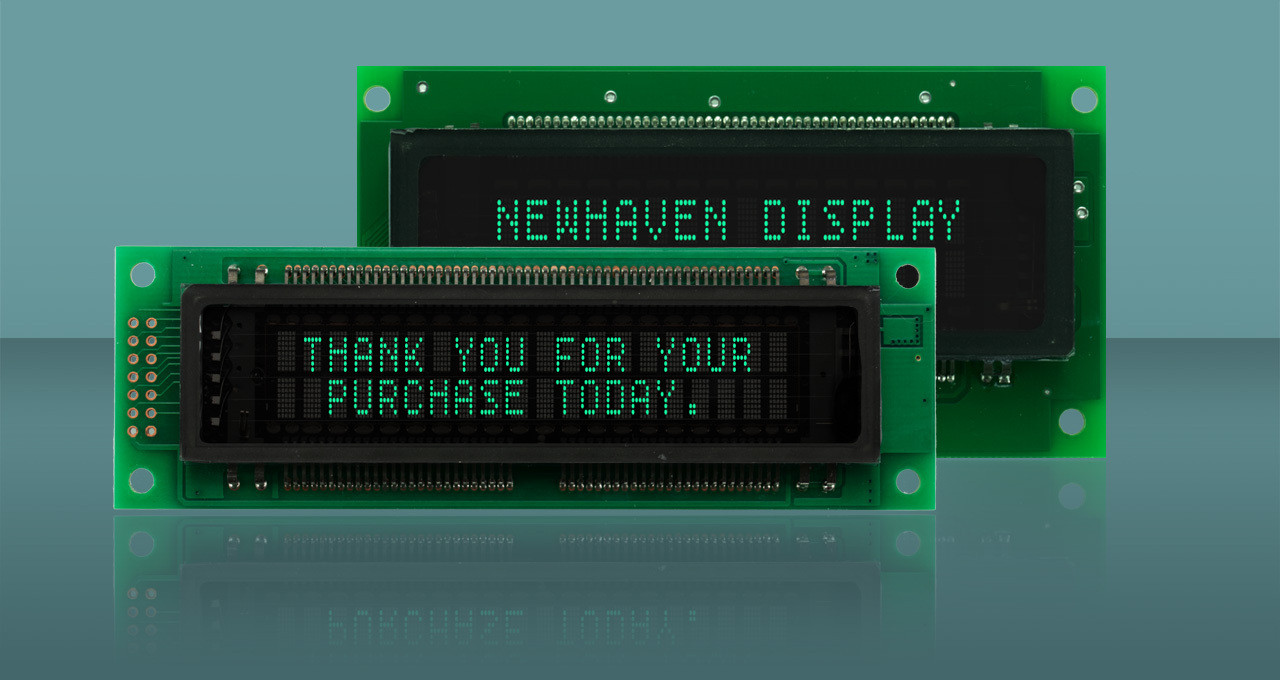
How to Choose a VFD
Here are six decisions to help narrow our selection of displays to the VFD that's right for your product: format, character size, module or glass, interface, power, and operating environment. Work through them in order, and you'll land on a short list of displays ready to incorporate into your design.
01 · DISPLAY FORMAT
Dot Matrix or 7-Segment
Full text, or just numbers?
Dot matrix VFDs build each character from a 5×7 or 5×8 grid of dots, so they can show letters, numbers, and symbols in 2×16, and 2×20 formats. 7-segment VFDs light fixed bar segments to form numerals and a few letters, ideal for clocks, counters, and simple readouts. Our 7-segment glass shows seven 12.4mm-tall digits. Choose dot matrix for menus and messages, and 7-segment when big, bright numbers are all you need. Characters glow green, with blue-green on select modules.
Dot Matrix
Letters, Numbers, and Symbols
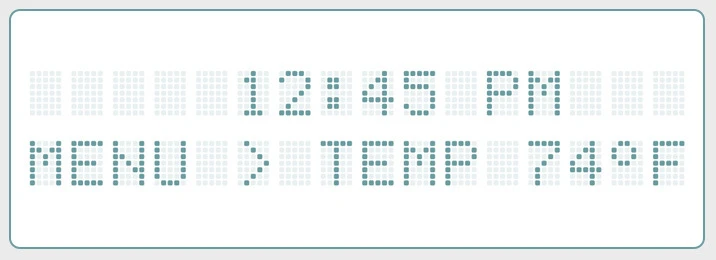
Best For: Menus and Messages
7-Segment
Big, Bright Numerals
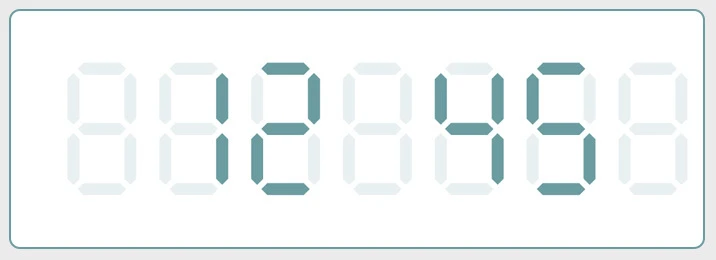
Best For: Clocks, Counters, and Simple Readouts
02 · CHARACTER SIZE
Character Size & Viewing Distance
How far away will users read the display?
Character height matters more than row count when operators read a display from across the room. Our 2×16 modules range from 4.34mm characters in an 84×44mm footprint to 9.22mm characters in a 122×44mm module, and our 2×20 modules come with 5.34mm or 8.95mm characters. Larger characters need a larger outline, so check both against your enclosure and how far your users stand from the panel.

| Format | Type | Character Size | Outline | Best For |
|---|---|---|---|---|
| 2×16 | Dot Matrix Module | 4.34 × 2.26mm 9.22 × 3.85mm |
84 × 44mm 122 × 44mm |
|
| 2×20 | Dot Matrix Module | 5.34 × 2.35mm 8.95 × 3.85mm |
116 × 37mm 146 × 43mm |
|
| 1×7 | 7-Segment Glass | 12.4 × 6.8mm | 98 × 33mm |
|
2×16
2×20
1×7
Type
Dot Matrix Module
Type
Dot Matrix Module
Type
7-Segment Glass
Character Size
4.34 × 2.26mm
9.22 × 3.85mm
Character Size
5.34 × 2.35mm
8.95 × 3.85mm
Character Size
12.4 × 6.8mm
Outline
84 × 44mm
122 × 44mm
Outline
116 × 37mm
146 × 43mm
Outline
98 × 33mm
Best For
• Compact Text Readouts
• Reading From a Distance
Best For
• Two-Line Menus and Messages
• Large Two-Line Readouts
Best For
• Large Numeric Readouts, Clocks, Counters
03 · MODULE TYPE
Module or Glass
Plug-and-play module, or your own drive electronics?
VFD modules include the controller and power circuitry on board, so a single 5V supply runs the entire display, filament and all. VFD glass is the bare display. Your design supplies the filament power, the higher grid and anode voltages, and the driver electronics, which gives you full control at the cost of more engineering. For most products, a module is the faster, lower-risk path from prototype to production.
VFD Module
Plug and Play
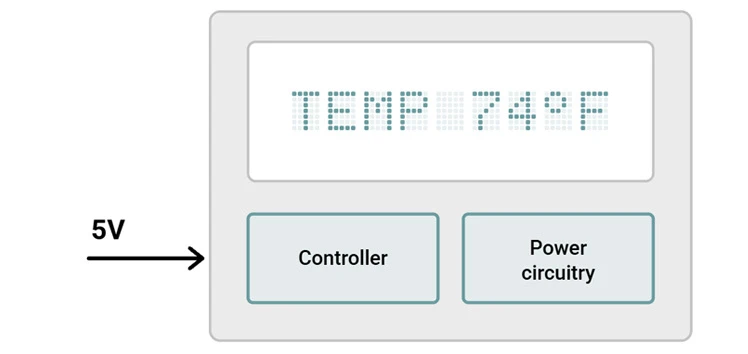
Everything On One Board
VFD Glass
Your Own Drive Electronics
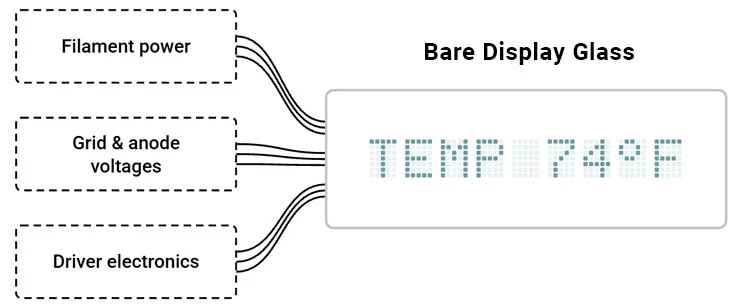
Your Design Supplies
04 · INTERFACE
Built-in Interface
How will the display talk to your microcontroller?
Our VFD modules use the PT6314 controller, which supports 4- or 8-bit parallel and serial communication, much like a character LCD. Its built-in ROM holds 248 characters, and you can define up to eight custom 5×8 characters for icons or symbols. Parallel suits microcontrollers with I/O pins to spare, while serial cuts the connection to a few wires for pin-constrained designs.
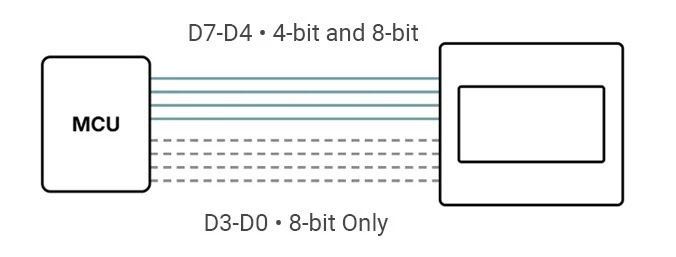 Paralelo
4-bit or 8-bit
Best ForMCUs with I/O Pins to Spare
Main ConsiderationUses 7-11 Pins Depending on Mode
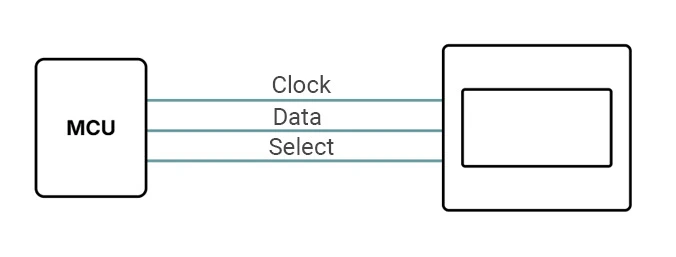 Serial
Synchronous Serial
Best ForPin-Constrained Designs
Main ConsiderationCheck Timing Requirements in the Datasheet
05 · POWER
Consumo de energia
Does your power budget have room for a filament?
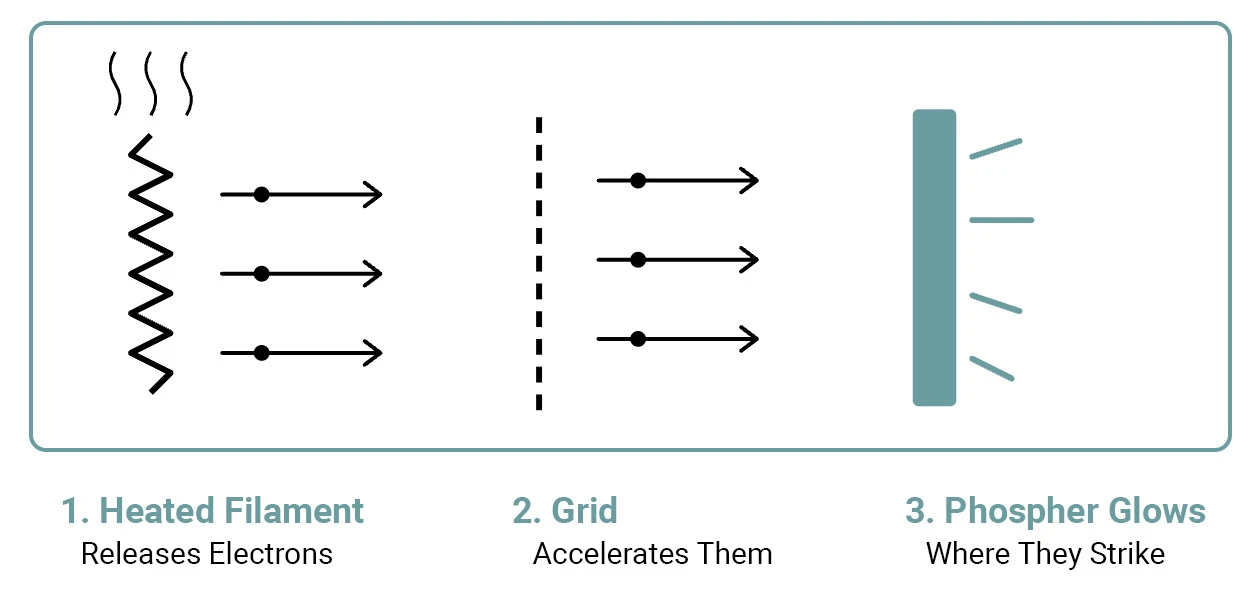
VFDs create light by heating a filament and accelerating electrons into phosphor, so they draw more power than LCD, TFT, or OLED displays. That makes them a strong fit for line-powered equipment like appliances, instruments, and industrial controls, and a weaker fit for battery-powered products. Check the supply current on each datasheet when you size your 5V rail.
06 · ENVIRONMENT
Temperature, Brightness, and Viewing Angle
Will your display face extreme temperatures or tough viewing conditions?
VFDs glow brightly on their own, so they stay readable in dim rooms and from wide angles without a backlight. Our VFD modules and dot matrix glass are rated from -40°C to 85°C with no heater required, and they respond instantly in the cold, where an LCD slows down. That combination is why VFDs remain a go-to for automotive audio, appliances, test equipment, and industrial controls.

Perguntas frequentes
A vacuum fluorescent display (VFD) produces light inside a sealed vacuum tube. A heated filament releases electrons that strike phosphor-coated segments or dots, making them glow. Because each character emits its own light, VFDs are bright, high-contrast, and readable from wide angles. They also perform reliably across extreme temperatures.
VFDs are the brightest of the three and handle -40°C to 85°C, but they draw the most power and are mostly limited to character and segment formats. OLEDs offer similar self-lit contrast in a thinner, lower-power package, with graphic and color options. Character and graphic LCDs cost the least, use the least power, and read best in direct sunlight with the right backlight or display mode.
Often, yes. Our VFD modules come in familiar 2×16 and 2×20 formats, use 4- or 8-bit parallel or serial interfaces, and run on 5V, and our compact 2×20 VFD shares the 116×37mm outline of a standard 2×20 character LCD. Check the pinout, commands, and power budget in the datasheet before you swap, or send us your current part number for help.
VFDs are known for long service life, but their phosphor gradually dims with use, and characters that stay lit constantly can age faster than the rest. Turn the display off or blank it when it isn't needed, and vary static content where you can, to keep brightness even over the life of your product.
Yes. Each VFD has a datasheet on its product page, and our Support Center has documentation for the PT6314 controller used on our modules. Our engineers can also help with interface setup and bring-up if you're integrating a VFD for the first time.
Yes. We work with engineers on modified and custom VFD solutions, including connector and cable changes and display configurations built around your product. Start from the closest standard part and tell us what needs to change.