


Explicação sobre os ecrãs em conformidade com as normas RoHS e REACH
30 de abril de 2026
Environmental regulations influence how electronic components are designed, sourced, and manufactured. Displays used in industrial equipment, medical devices, and consumer electronics must meet strict material standards that reduce environmental and health risks. Two widely recognized regulatory frameworks governing these requirements are Restriction of Hazardous Substances (RoHS) and Registration, Evaluation, Authorization, and Restriction of Chemicals (REACH).
Manufacturers that integrate displays into their products must account for these regulations during development. Compliance affects material selection, manufacturing processes, and product documentation, making regulatory knowledge an integral part of modern display design.
Neste artigo:
- What is RoHS Compliance?
- What is REACH Compliance?
- Key Differences Between RoHS and REACH
- Why RoHS & REACH Compliance Matters in Display Design
- How Displays Are Evaluated for RoHS & REACH Compliance
- Engineering Displays to Meet RoHS & REACH Standards
- Common Compliance Challenges in Display Manufacturing
- How Newhaven Display Ensures RoHS & REACH Compliance
- Industries That Require RoHS & REACH Compliant Displays
- Choosing a RoHS & REACH Compliant Display Partner
What Is RoHS Compliance?
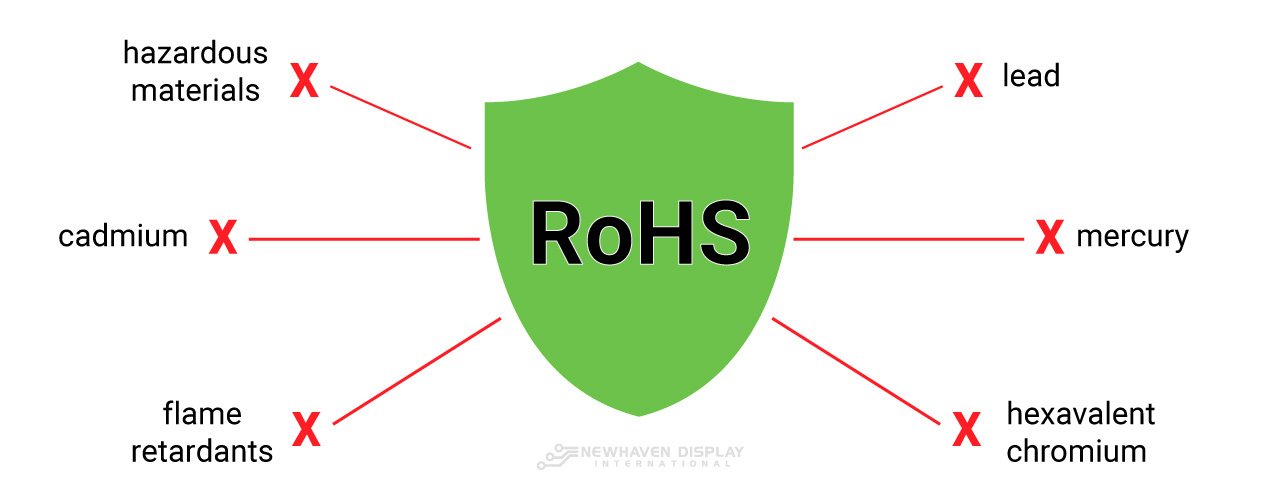
Restriction of Hazardous Substances (RoHS) is a European Union directive that limits the use of certain hazardous materials in electrical and electronic equipment. The regulation targets substances that may pose environmental or health risks during manufacturing, use, or disposal.
RoHS restricts materials such as lead, mercury, cadmium, hexavalent chromium, and specific flame retardants used in electronic components. Manufacturers must confirm these substances remain below defined concentration limits.
The directive has been revised several times and continues to be updated as additional substances are evaluated. Manufacturers and component suppliers must regularly review materials and documentation to maintain compliance with current standards.
What Is REACH Compliance?
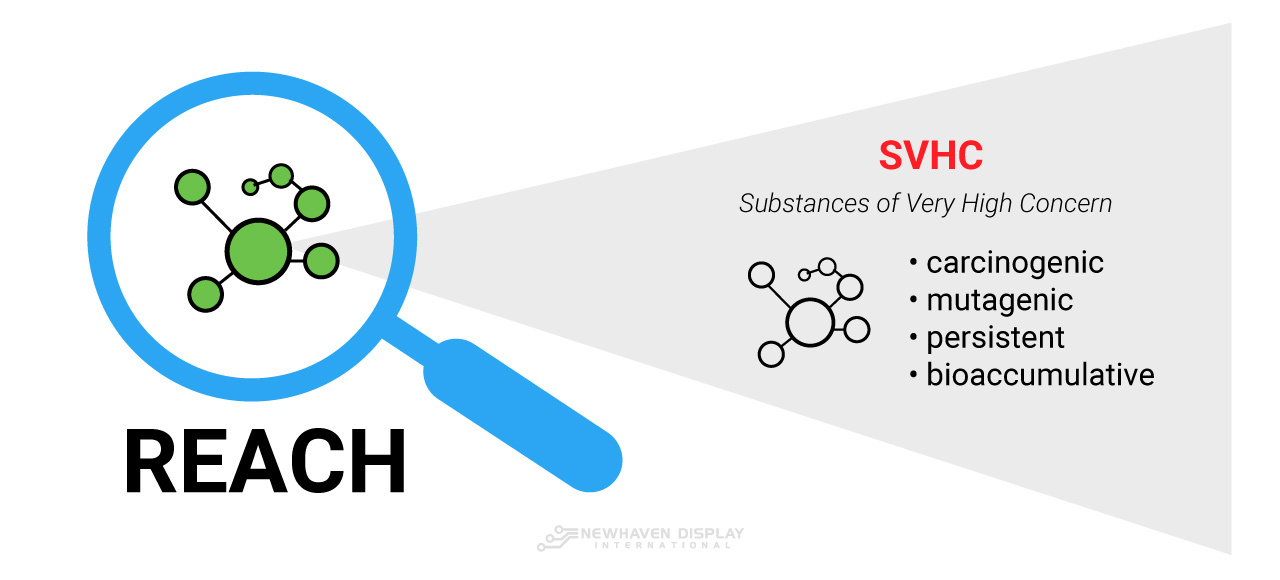
Registration, Evaluation, Authorization, and Restriction of Chemicals (REACH) is a European Union regulation that addresses the use of chemical substances in products and manufacturing processes. The regulation requires companies to identify and manage risks related to chemicals used in materials and components.
REACH focuses on substances of very high concern (SVHC), which may pose risks to human health or the environment. Manufacturers must track these substances throughout the supply chain and confirm that regulated thresholds are not exceeded.
Like RoHS, REACH requirements evolve. The list of regulated substances is periodically updated, which means manufacturers and component suppliers must regularly review materials and documentation to remain compliant.
Key Differences Between RoHS and REACH
RoHS and REACH address hazardous materials, but they regulate them in different ways.
RoHS focuses specifically on electrical and electronic equipment. It restricts a defined list of substances that cannot exceed certain concentration limits within electronic components, including those used in display modules.
REACH operates on a broader regulatory scope. It evaluates chemical substances used across many industries and maintains a growing list of substances of very high concern (SVHC). Companies must monitor these substances throughout the supply chain and report their presence when applicable.
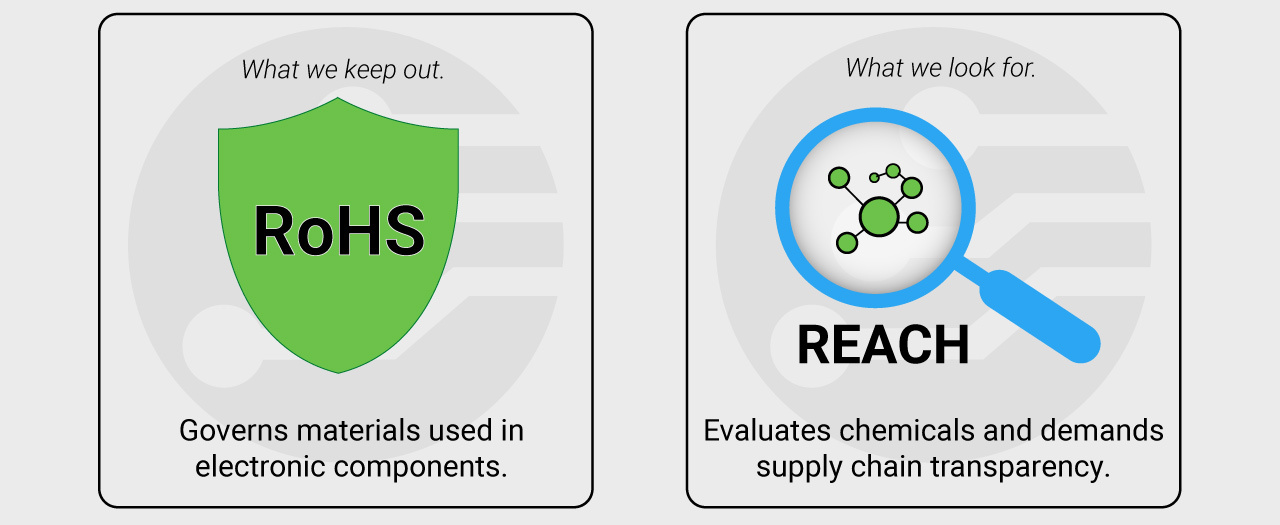
For display manufacturers, RoHS primarily governs the materials used in electronic components, while REACH emphasizes chemical transparency and ongoing supply chain monitoring.
Why RoHS & REACH Compliance Matters in Display Design
Compliance requirements influence several aspects of display design and manufacturing. Material selection is one of the first considerations. Components, solder materials, adhesives, and coatings must all meet regulatory limits for restricted substances.
These regulations also affect supplier selection and documentation practices. Display manufacturers must work with component suppliers to verify materials meet RoHS and REACH thresholds and maintain records confirming compliance.
For manufacturers integrating displays into finished products, compliant components help reduce regulatory risk and support environmental responsibility.
How Displays Are Evaluated for RoHS & REACH Compliance
Evaluating displays for RoHS and REACH compliance involves reviewing the materials used in each component of the module. Manufacturers examine elements such as circuit boards, solder materials, connectors, backlighting components, and protective coatings to confirm that restricted substances remain within regulatory limits.
This process typically includes supplier documentation, material declarations, and laboratory testing when necessary. Manufacturers rely on detailed reporting from component suppliers to verify compliance across the entire display assembly.
Regular reviews help maintain compliance as regulatory lists evolve and new materials are introduced into the supply chain.
Engineering Displays to Meet RoHS & REACH Standards
Engineering displays for RoHS and REACH compliance begins with careful material selection. Engineers review the substances used in circuit boards, solder compounds, adhesives, coatings, and other components to confirm they remain within regulated limits.
Component sourcing also requires close oversight. Display manufacturers work with suppliers that provide verified material declarations and documentation for each part used in the display assembly.
Manufacturing processes must also be evaluated to prevent restricted substances from entering production. Careful coordination between engineering, sourcing, and quality teams helps maintain compliance throughout the display design and manufacturing cycle.
Common Compliance Challenges in Display Manufacturing
Maintaining RoHS and REACH compliance across a display supply chain can present several challenges. Regulations evolve, materials change, and manufacturers must confirm that every component in a display assembly meets current standards.
Common challenges include:
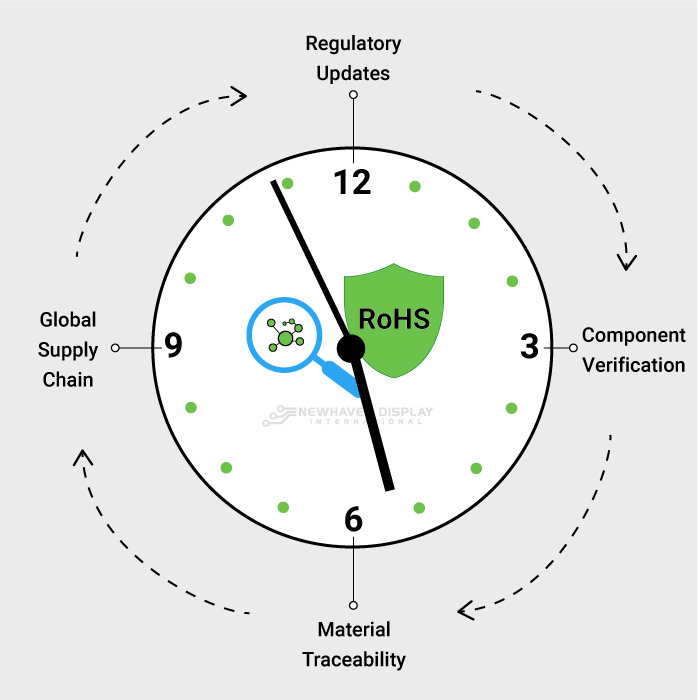
- Keeping pace with regulatory updates, including new substances added to REACH SVHC lists
- Verifying compliance across complex display assemblies that contain many materials and components
- Maintaining traceability for materials used in production
- Coordinating compliance across global supply chains
Addressing these challenges requires consistent monitoring of materials, supplier transparency, and strong internal quality processes.
How Newhaven Display Ensures RoHS & REACH Compliance
Maintaining RoHS and REACH compliance requires close attention to the materials used in every display module. At Newhaven Display, our team reviews component materials and works directly with suppliers to confirm they meet current regulatory requirements.
Compliance documentation is supported through supplier declarations, material reporting, and internal quality processes. These steps help verify that restricted substances remain within allowed limits and that our displays align with current RoHS and REACH standards.
For product-specific certifications or compliance documentation, manufacturers can contact the Newhaven Display quality team for more detailed information.
Industries That Require RoHS & REACH Compliant Displays
RoHS and REACH compliance is especially important in industries where environmental regulations and product safety standards are closely monitored. Manufacturers in these sectors must confirm that electronic components, including displays, meet strict material requirements before products reach the market.
Industries that commonly require compliant displays include:
- Medical devices, where material transparency and regulatory documentation are often required
- Industrial equipment, particularly systems sold in global markets with environmental regulations
- Automotive and transportation technologies, where electronics must meet strict manufacturing standards
- Consumer electronics, where regulatory compliance is required for distribution in many regions
Choosing a RoHS & REACH Compliant Display Partner
Selecting a display supplier that understands RoHS and REACH requirements can make compliance easier throughout product development and manufacturing. A knowledgeable partner should provide clear material documentation, practice strong supplier oversight, and stay current with evolving regulatory updates.
Manufacturers also benefit from working with suppliers that build compliance into their engineering and quality processes. Early collaboration helps confirm that display materials, components, and production methods align with regulatory expectations before products move into full production.
If your team is evaluating compliant display solutions, contact Newhaven Display to discuss your requirements or request product-specific compliance documentation.