


Top Display Types for Industrial Control Systems
Mar 30th 2026
Every industrial control system depends on clear, immediate access to information. Operators rely on visual feedback to monitor performance, identify faults, and make split-second adjustments in demanding environments.
The display you choose directly influences how effectively that information is delivered. Different display types perform very differently under vibration, temperature shifts, extended run times, and varying lighting conditions. Understanding those differences allows OEMs and system integrators to design equipment that performs reliably on the factory floor, in power facilities, and in field installations.
이 문서에서:
- Key Takeaways
- Understanding Industrial Control System Requirements
- TFT Displays: A Reliable Workhorse for Dynamic Interfaces
- IPS Technology: Wide Viewing Angles for Collaborative Environments
- OLED Displays: Compact Solutions with High Visual Impact
- Character and Graphic LCDs: Simple, Trusted, and Effective
- Key Considerations for Industrial Display Selection
- Why OEMs and System Integrators Trust Newhaven Display
Key Takeaways
- Industrial control systems require displays built for harsh environments and long operating lifecycles.
- Different display types serve different interface needs, from advanced TFT and IPS panels to simple character and graphic LCDs.
- TFT displays for dynamic interfaces and detailed visual feedback
-
- IPS technology for wide viewing angles and shared visibility
-
- OLED displays for compact, high-contrast applications
-
- Character and graphic LCDs for simple, reliable system readouts
- Resolution, visibility, integration, and lifecycle planning are central to display selection.
Understanding Industrial Control System Requirements
Industrial control systems operate in conditions that place sustained stress on electronic components. Displays must tolerate vibration, temperature swings, electrical interference, and continuous runtime without performance degradation.
Lighting conditions vary widely across installations. A control panel may face harsh overhead lighting, direct sunlight, or dim factory floors, making readability a key design factor.
Lifecycle expectations further complicate display selection. Many industrial platforms remain in production for years, requiring components that maintain availability and consistent specifications across long manufacturing cycles.
Responsiveness also plays an important role. Operators rely on immediate visual confirmation when adjusting system parameters or responding to alerts. Delays or unclear feedback can slow workflows and increase the likelihood of error.
TFT Displays: A Reliable Workhorse for Dynamic Interfaces
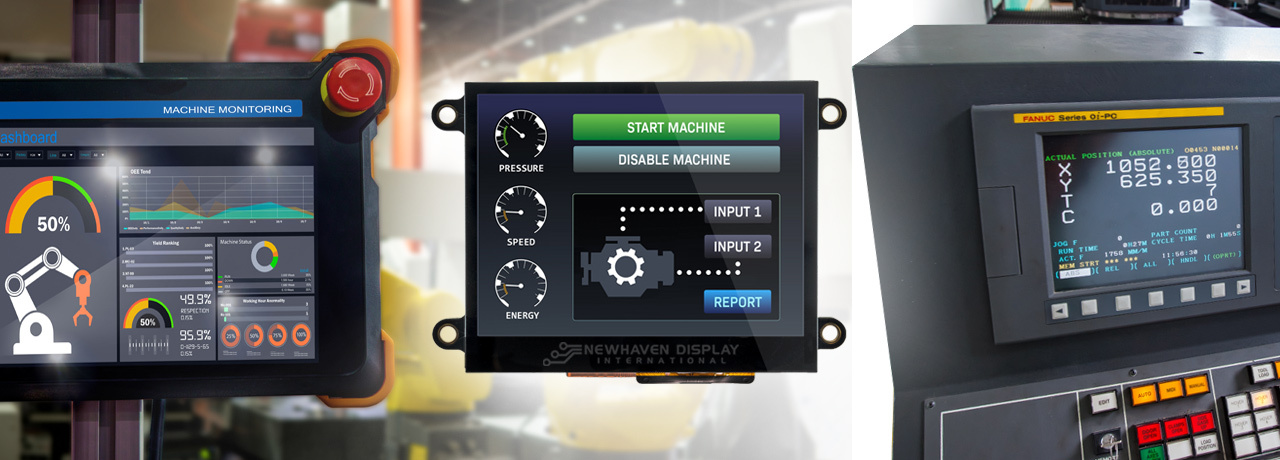
TFT (Thin-Film Transistor) displays are one of the most common display types used in industrial control systems. They deliver full-color graphics, higher resolutions, and fast refresh rates suited for real-time data, diagnostics, and multi-layer menus.
Control panels that require charts, system status indicators, and detailed visual feedback benefit from TFT technology’s responsiveness and clarity. A wide range of sizes and interface options also makes integration more flexible for OEMs.
For applications that demand dynamic interfaces and detailed visuals, TFT displays remain a dependable solution.
IPS Technology: Wide Viewing Angles for Collaborative Environments
IPS (In-Plane Switching) technology builds on traditional TFT displays by improving color consistency and viewing angles. In industrial control systems where multiple operators may view the same screen from different positions, this wider visibility becomes especially valuable.
Industrial equipment is often operated or monitored by more than one person at a time. IPS panels maintain image clarity and color accuracy even when viewed off-center, allowing operators standing beside or slightly away from the equipment’s control panel to see the same information clearly.
For environments that prioritize consistent readability across different viewing positions, IPS technology offers a practical enhancement over standard TFT displays.

OLED Displays: Compact Solutions with High Visual Impact
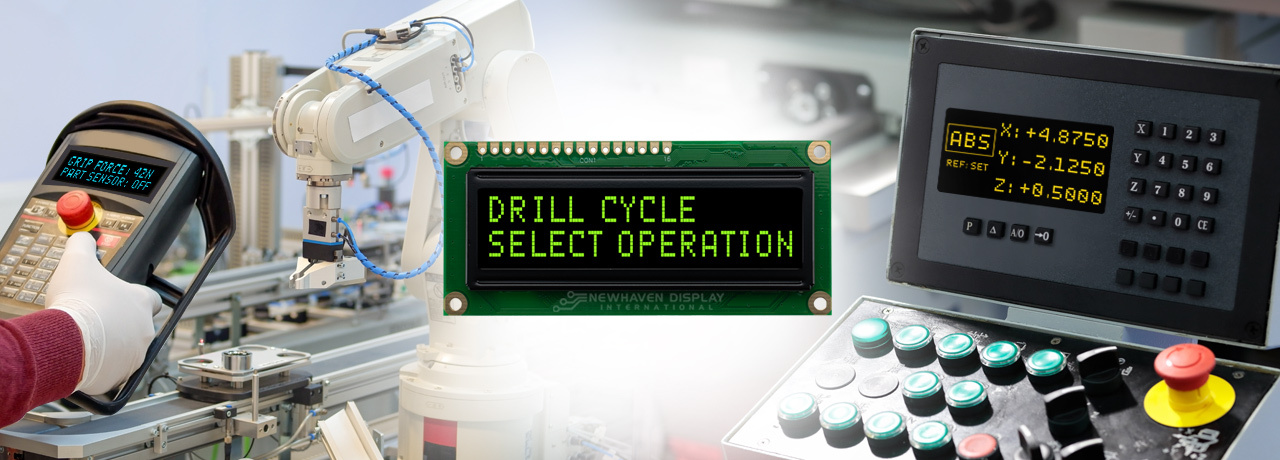
OLED (Organic Light-Emitting Diode) displays offer strong contrast, deep blacks, and fast response times in compact form factors. Because each pixel emits its own light, OLED panels do not require a traditional backlight, allowing for thinner designs, high visual clarity, and improved power efficiency.
In industrial control systems with limited panel space or simplified interfaces, OLED displays provide sharp text and high contrast for status indicators, alerts, and key operating data. Their fast refresh performance also supports responsive user feedback.
While typically smaller in size than TFT or IPS panels, OLED technology delivers strong visibility and visual impact in applications where space efficiency and contrast are priorities.
Character and Graphic LCDs: Simple, Trusted, and Effective
Not every industrial interface requires complex graphics or full-color visualization. In many control systems, clear text and basic symbols are sufficient to communicate system status and operating conditions.
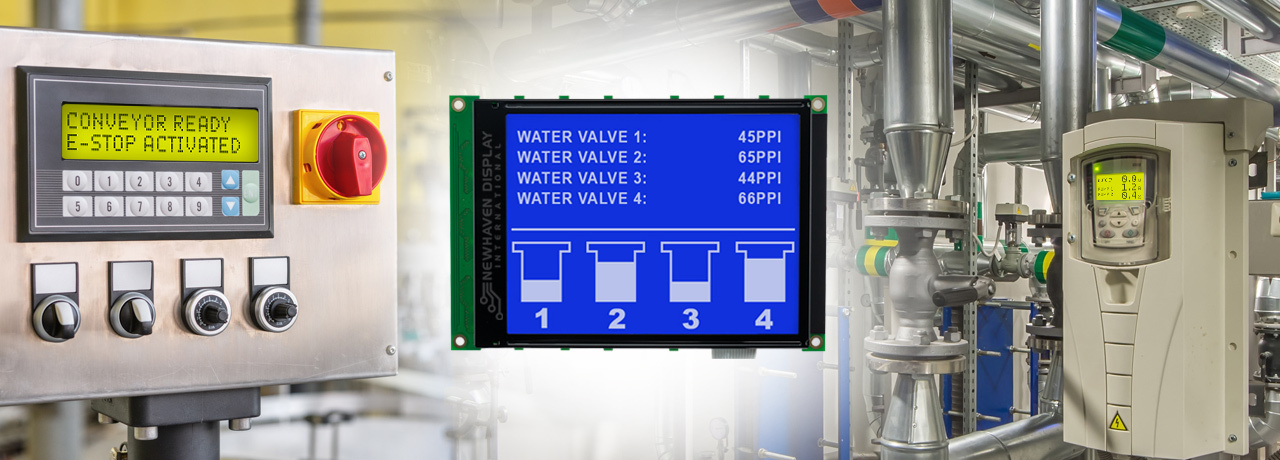
Character LCDs are commonly used for straightforward readouts such as temperature, pressure, or runtime data. Their low power consumption and established reliability make them well-suited for rugged environments and extended production cycles.
Graphic LCDs build on this foundation by enabling custom icons, simple diagrams, and structured layouts. While they do not match the color depth of TFT or IPS panels, they provide greater visual flexibility than character-only displays without significantly increasing system complexity.
Key Considerations for Industrial Display Selection
Selecting the right display for an industrial control system requires balancing performance, durability, and integration. When evaluating TFT, IPS, OLED, and character or graphic LCD technologies, several factors help determine the best fit.
Environmental Conditions
Temperature range, vibration, moisture, and dust all affect display longevity and readability. Industrial TFT and LCD modules, including character and graphic LCDs, are often designed to operate reliably in demanding environments.
Brightness and Readability
Displays must remain visible in bright factory lighting, outdoor installations, or low-light environments. High-brightness TFT and sunlight-readable LCDs improve visibility in bright conditions, while OLED displays provide strong contrast for compact interfaces.
Resolution and Interface Needs
Interface complexity determines the display technology. TFT and IPS displays support detailed graphics and layered menus, while character and graphic LCDs are effective for simple system readouts.
Lifecycle and Availability
Industrial systems may remain in production for years. Displays used in these platforms must offer long-term availability and stable specifications.
전력 소비
Energy efficiency can be important in continuously operating systems. OLED displays reduce power usage because they do not require a backlight, while many LCD modules are optimized for low-power operation.
Mechanical Integration
Panel space and enclosure design affect display size and mounting options. Compact OLED modules, character LCDs, and smaller TFT displays work well in space-constrained control panels.
Carefully evaluating these factors helps ensure the selected display technology aligns with both system requirements and long-term reliability.
Why OEMs and System Integrators Trust Newhaven Display
OEMs and system integrators in industrial control systems require consistent performance and long-term reliability.
For over 20 years, Newhaven Display has supplied LCD, TFT, IPS, OLED, and VFD solutions built for demanding environments. Our ISO-certified quality processes and rigorous testing help maintain dependable performance across extended product lifecycles.
With strong in-stock inventory, clear technical documentation, and support from experienced engineers and customer service specialists, we help to streamline development for factory automation, energy systems, transportation controls, and other industrial applications.
If you are evaluating display types for industrial control systems, our team is ready to work with you to identify the right technology for your specific requirements.