


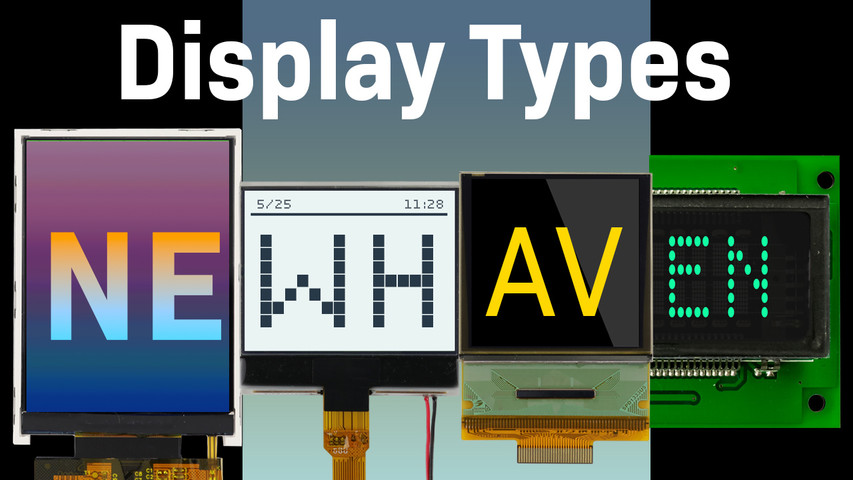
Exploring Display Types: TFT, LCD, OLED, & VFD
Oct 20th 2025
Every product that incorporates a display relies on the right technology to meet performance and reliability goals. Choosing between TFT, LCD, OLED, or VFD modules means looking at factors such as brightness, power draw, display content, and cost before committing to a design.
Each technology brings distinct strengths and limitations. Some work best in compact, low-power devices, while others are built for high-visibility industrial equipment. Understanding how these display types differ helps narrow options and align the choice with the intended application.
In this Article:
- Understanding Display Technology
- Capabilities of Each Display
- Comparing Display Technologies Side by Side
- Customization & Support from Newhaven Display
Understanding Display Technology
Display technology has evolved over decades to meet the needs of modern applications. Each type is built to present information clearly and reliably in its intended environment.
Some are designed for low power consumption, making them a good fit for portable or battery-driven devices. Others are built for durability in harsh conditions, while certain options focus on sharp images and smooth motion. Simpler technologies remain valuable where character output and cost-efficiency matter most.
For engineers and product designers, understanding these differences helps avoid integration issues and leads to stronger designs.
Graphic or Character LCDs (Liquid Crystal Display)
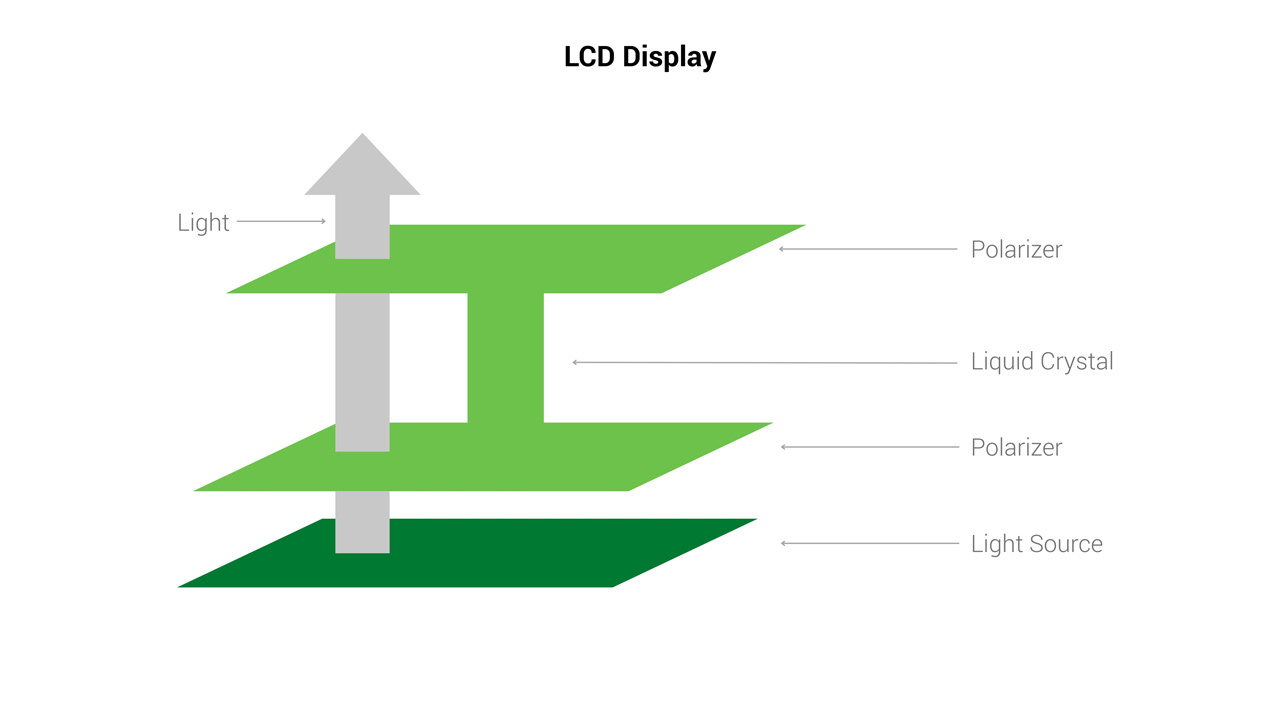
LCDs are one of the most established display types, using liquid crystals and a backlight to produce characters or images. Their proven design makes them dependable across a wide range of products.
Advantages:
- Low power consumption
- Long operating life
- Consistent visibility when paired with backlighting
Applications:
LCDs are common in medical devices, industrial equipment, and consumer products where efficiency and reliability are priorities.
Newhaven Display’s LCD Line:
Newhaven Display offers character and graphic LCDs in various backlight colors, interfaces, and sizes.
TFT (Thin-Film Transistor) Displays
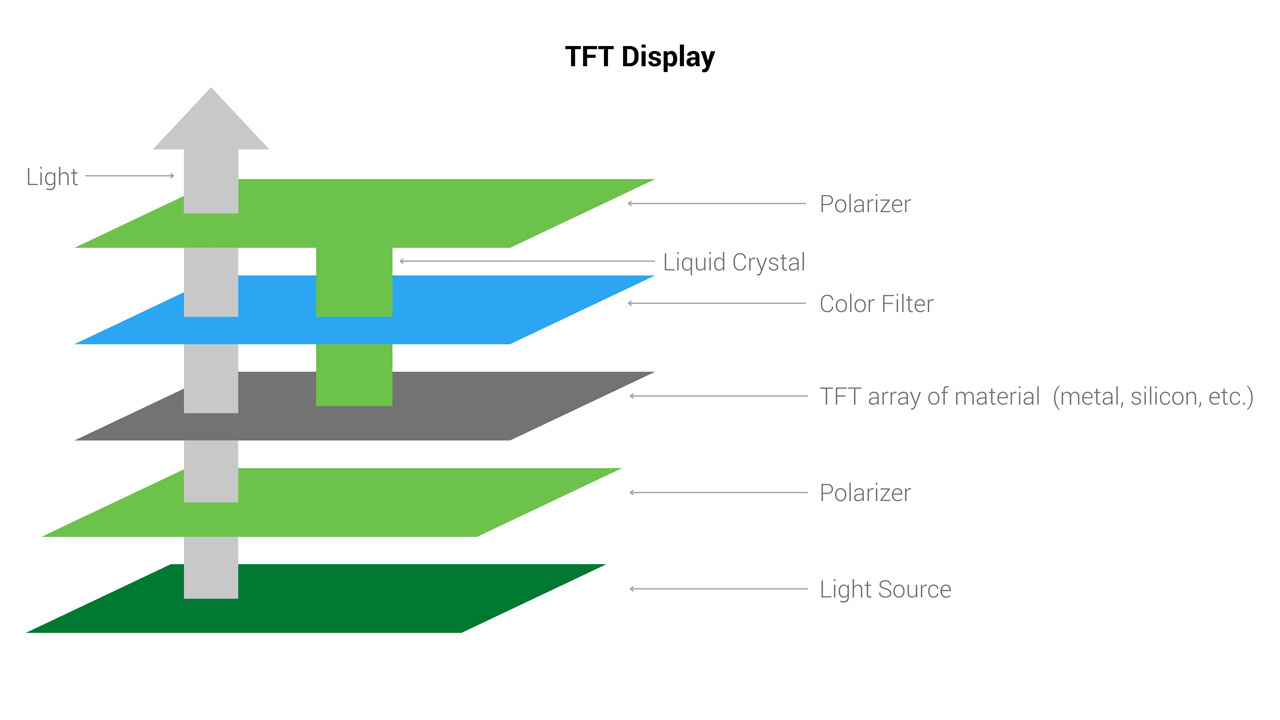
TFTs are a type of LCD that uses thin-film transistors to control each pixel directly. This design allows for higher resolution, faster response times, and full-color output, making it a strong choice for modern visual interfaces.
Advantages:
- High image quality with full-color capability
- Quick response suitable for motion and video
- Wide range of sizes and resolutions available
Applications:
TFT displays are common in automotive dashboards, handheld electronics, medical devices, and industrial controls, where sharp visuals and speed are priorities.
Newhaven Display’s TFT Line:
Our TFT product range includes sizes from 1.8 inches up to larger formats, along with IPS models for wide viewing angles, sunlight-readable options, and modules with integrated touch.
OLED (Organic Light Emitting Diode)
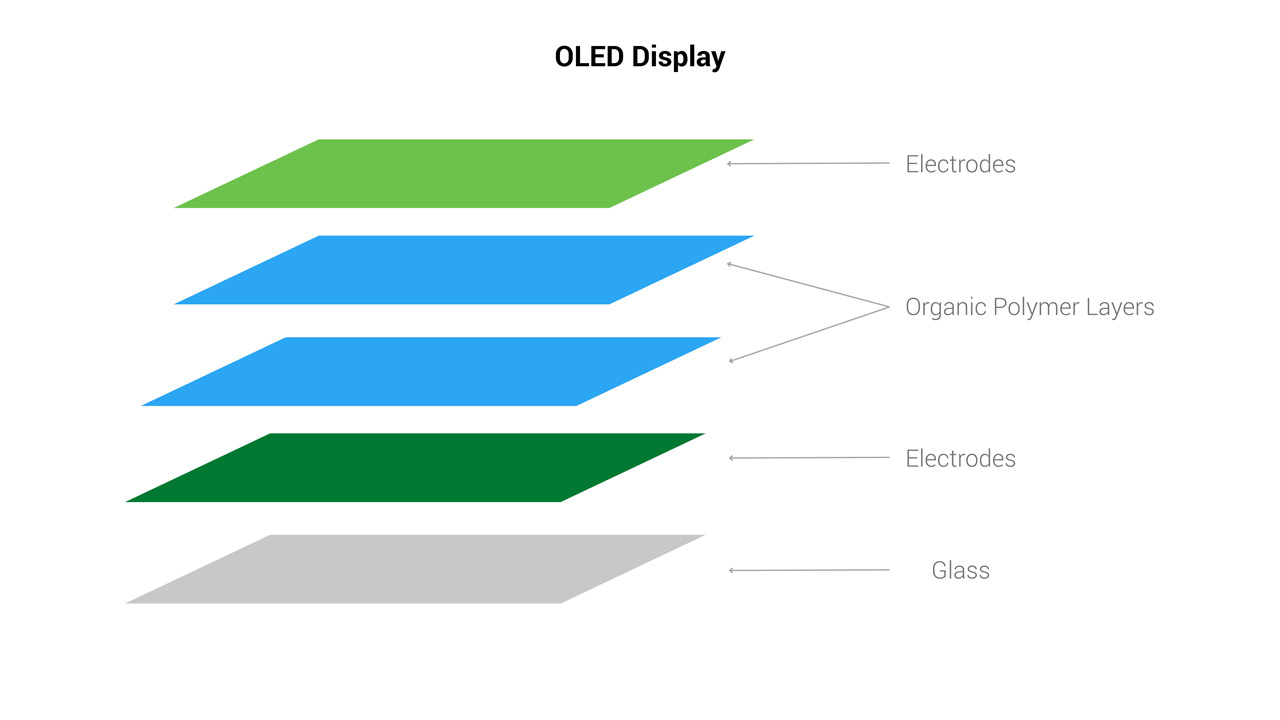
OLEDs generate light from organic compounds when current is applied, removing the need for a backlight. This makes them thinner, lighter, and capable of delivering high-contrast output with wide viewing angles.
Advantages:
- High contrast and deep blacks
- Wide viewing angles
- Thin and lightweight construction
- Fast response times
Applications:
OLEDs are used in consumer electronics, medical instruments, and industrial devices where clarity, readability, and compact size are important. They are especially effective in battery-powered products since no backlight is required.
Newhaven Display’s OLED Line:
Our OLED product line includes character, graphic, and full-color modules. Options range from compact monochrome displays to models designed for high-clarity output.
VFD (Vacuum Fluorescent Display)
VFDs use phosphor-coated anodes that emit light when struck by electrons in a vacuum. They are known for bright output and wide operating temperature ranges, making them dependable in specialized applications.
Advantages:
- High brightness and clarity
- Wide viewing angles
- Strong performance in both low and high temperatures
- Long-lasting durability in demanding environments
Applications:
VFDs are found in automotive audio systems, industrial equipment, and appliances where visibility must be consistent under changing lighting and temperature conditions.
Newhaven Display’s VFD Line:
Newhaven Display carries character VFD modules that deliver bright output and durability, making them a practical choice for equipment that needs reliable visibility in tough conditions.
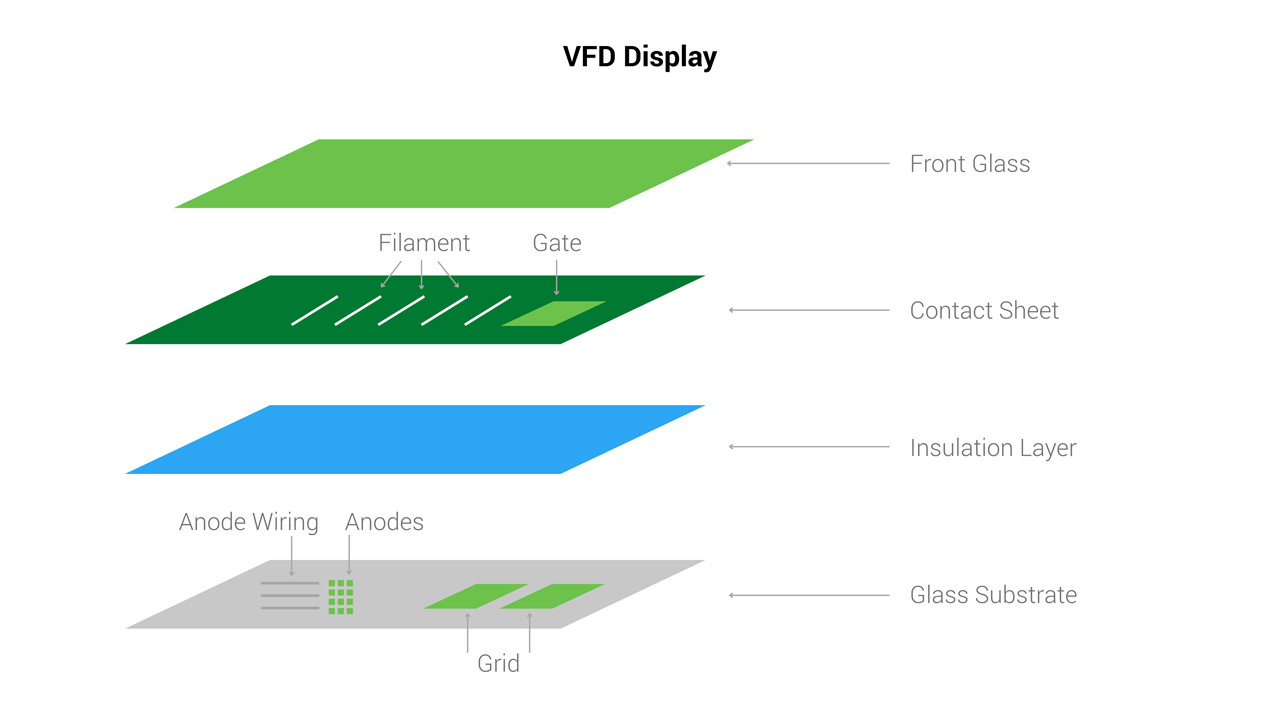
Capabilities of Each Display
Different display types excel in different ways, depending on what the product requires:
Monochrome vs. Color:
Character LCDs and VFDs are most often monochrome. TFT and OLED modules deliver full-color output, making them the better fit for visual interfaces and graphics.
Character vs. Graphics:
LCDs and VFDs can be built as simple character modules or, in the case of LCDs, as graphic displays for icons and patterns. TFT and OLEDs are geared toward detailed graphics and complex layouts.
Response Time:
TFT and OLED technologies switch pixels quickly, which supports smooth video or animation. LCDs refresh more slowly, and VFDs fall in between with performance suitable for frequent updates.
Static vs Motion Display:
LCDs and VFDs work well for steady, unchanging data. TFT and OLEDs provide the responsiveness needed for motion-heavy content.
Comparing Display Technologies Side by Side
| Aspect | LCD | TFT | OLED | VFD |
|---|---|---|---|---|
| Power Consumption | Low | Moderate | Low to moderate (depends on brightness or module design) | Higher than LCD, TFT, or OLED |
| Viewing Angle | Limited without enhancements | Wide (especially IPS models) | Very wide | Wide |
| Brightness | Good with backlight options | High, sunlight-readable versions available | High contrast with deep blacks | Very bright, even in low light |
| Cost-Effectiveness | Low cost, widely available | Moderate, varies by design | Higher cost compared to LCD/TFT | Low |
| Environmental Tolerance | Performs well in many settings | Reliable, but temperature sensitive | Sensitive to moisture and burn-in | Excellent in wide temperature ranges |
| Typical Applications | Medical devices, industrial controls, consumer electronics | Automotive dashboards, handhelds, medical, and industrial | Portable electronics, high-clarity interfaces, battery-powered devices | Automotive audio, appliances, industrial equipment |
Customization & Support from Newhaven Display
Selecting the right display type is only part of the design process. Projects often involve specific requirements such as mechanical constraints, environmental conditions, or preferred interfaces. Newhaven Display works directly with engineers to supply both standard modules and custom solutions designed for these needs.
Each display is accompanied by detailed resources, including datasheets, wiring diagrams, sample code, and application notes. These tools make integration easier and reduce delays during development. For unique applications, our engineering team collaborates with customers to create tailored options in size, interface, or performance.
Ready for a display solution that fits your project? Contact us today to discuss your design or request a same-day quote.