


What is an IPS Display?
Mar 30th 2026
Display technology has been evolving for more than a century and continues to drive innovations in the electronic device market. IPS technology was developed in the 90s to solve color and viewing angle issues.
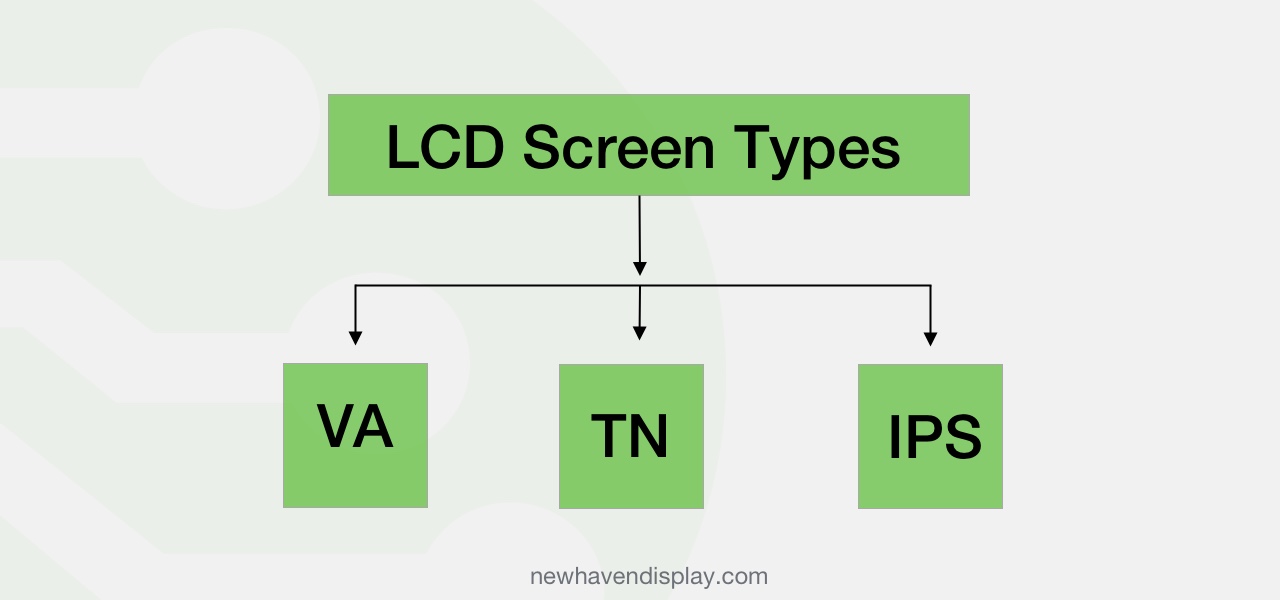
Today, IPS display panels deliver the best colors and viewing angles compared to other popular display planes, including VA (vertical alignment) and TN (twisted nematic).
Related: Understanding IPS Technology
I denna artikel:
- What is IPS?
- How Does IPS Work?
- Benefits of IPS Display Monitors
- Common Applications of IPS Displays
- Differences between IPS, TN, and VA
- IPS vs OLED: Key Differences
- Why Use an IPS Display / Monitor?
- IPS Display Lifespan and Reliability
- How to Choose the Right IPS Display
- IPS Display disadvantages
- Slutsats
What is IPS?
IPS (In-Plane Switching) is a type of LCD technology designed to improve viewing angles and color accuracy. Unlike traditional LCD panels, IPS technology aligns liquid crystals parallel to the display surface, allowing images to remain consistent even when viewed from different angles.
IPS panels are widely used in applications where clear visuals and stable color reproduction are important.
How Does IPS Work?
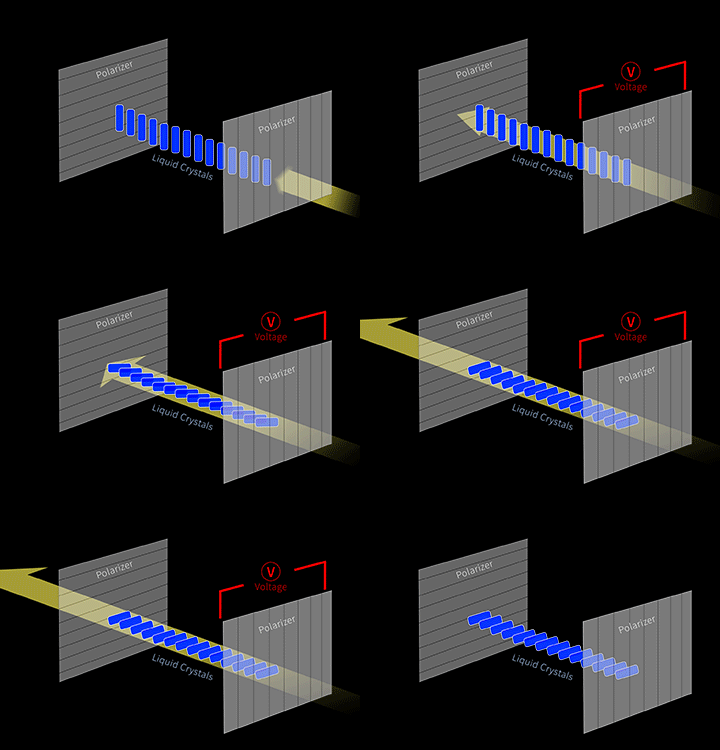
IPS technology modifies how liquid crystals move within an LCD panel. In traditional LCD technologies, crystals tilt vertically when voltage is applied, which can cause images to be less visible from wide angles. In an IPS display, the liquid crystals rotate parallel to the display surface, or “in-plane”, allowing light from the backlight to pass through the panel more evenly. The crystal alignment remains consistent across the display plane, improving how light is controlled within the panel and helping maintain stable image performance across the screen.
Benefits of IPS Display Monitors
One of the leading advantages that IPS offer is its ability to deliver wide angles while preserving colors and contrast. This means you can view an IPS screen from nearly any angle and get an accurate representation of the image on-screen.
Colors on IPS displays won’t get washed out or distorted when viewed at an angle the way they might on a TN or VA LCD screen.
IPS display screens and monitors offer the best quality in different environments (direct sunlight, low light, indoors, or outdoors) compared to TNs or VAs.
What are the benefits of IPS displays?
- Improved contrast
- Wider viewing angles
- Snabba svarstider
- Accurate, better colors
- Direct sunlight visibility
Common Applications of IPS Displays
IPS displays are used in products where consistent image quality and wide viewing angles are critical to performance.
- Industrial Equipment – Control panels, automation systems, and instrumentation that must remain readable from multiple operator positions
- Medical Devices – Patient monitors and diagnostic equipment that require clear, accurate visual data
- Automotive and Transportation – Dashboard interfaces and onboard systems that need reliable visibility in changing viewing conditions
- Consumer Electronics – Tablets and handheld devices that benefit from consistent image quality across the screen
Differences between IPS, TN, and VA
A quick comparison of the main characteristics differences between IPS, VA, and TN display panels.
TN vs VA vs IPS
| TN | VA | IPS | |
| Performance | Fastest - best performance | Slow - worst performance | Fast - good performance |
| Viewing Angle | Worst viewing angles | Good viewing angles | Best viewing angles |
| Color | Worst color | Good color | Best color |
| Contrast | Worst contrast | Best contrast | Good contrast |
| Price | Cheapest | Affordable | Most expensive |
| Användningsområden | Gaming because of performance | General use because of price and quality | Professional where quality is required |
TN vs IPS Panel Screen Example
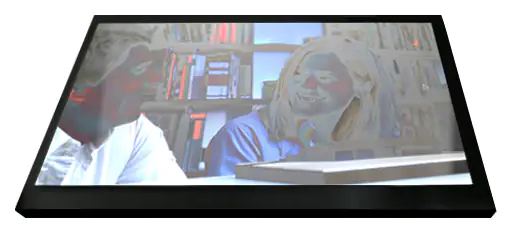
TN TFT (left) and IPS TFT (right) being viewed at an angle.

TN vs IPS Display Video Demo
See a demo of our own 7" IPS TFTs as we compare their colors, contrast, and viewing angles to TN TFT displays.
IPS vs OLED: Key Differences
IPS and OLED are two widely used display technologies, but they operate differently and serve different design priorities.
An IPS display is a TFT LCD technology that uses a backlight and a liquid crystal layer to form images.
OLED (Organic Light-Emitting Diode) displays use self-emissive pixels that generate their own light. Because each pixel can turn on or off individually, OLED panels can produce deeper blacks and higher contrast levels.
In many applications, IPS displays are preferred for their consistent image stability, long operating lifecycles, and cost efficiency, while OLED displays are often chosen when maximum contrast and thin form factors are the priority.
Why Use an IPS Display / Monitor?
IPS displays offer wide horizontal & vertical viewing angles, accurate color representation, and direct sunlight visibility.
Related: OLEDs in wearable devices
Widest Viewing Angles
TN LCDs often struggle to display accurate images from wide viewing angles. IPS LCDs eliminate nearly all color distortion and fading when viewed from various angles.
Accurate Color Representation
The powerful technology of In-Plane Switching delivers the most vivid, true colors available on any TFT LCDs. IPS is capable of producing over 16 million colors.
Direct Sunlight Visibility
A powerful LED backlight combined with unparalleled viewing angles makes for the best image quality under direct sunlight. IPS displays deliver higher quality images in sunny conditions than TN LCDs or OLED displays.
IPS Display Lifespan and Reliability
IPS displays are well-suited for products that require long service lifecycles. Because they are built on LCD technology with controlled backlighting, IPS panels can operate reliably for many years under continuous use.
Their architecture also supports consistent performance over time, which is important for systems that must remain in production or service for extended periods. Industrial equipment, medical instruments, and transportation systems rely on IPS displays when durability, predictable operation, and long-term component availability are important factors.
How to Choose the Right IPS Display
Selecting the right IPS display depends on the requirements of the application. Factors such as display size, resolution, brightness, and interface compatibility influence how well the display integrates into a system.
Design teams should also evaluate operating conditions. Temperature range, ambient lighting, and viewing distance can affect which IPS panel performs best in a given design.
Interface options are another key consideration. Many IPS displays communicate through standards such as SPI, RGB, LVDS, or MIPI DSI, and the selected interface must align with the system’s processor architecture.
Evaluating these factors early in development helps make sure the IPS display integrates smoothly while meeting the performance and reliability requirements of the final product.
IPS Display disadvantages
What are the disadvantages of an IPS display?
Price, contrast, and power consumption are some of the disadvantages of an IPS display/monitor.
Before you choose and buy an IPS display or monitor, there are certain drawbacks to consider:
Strömförbrukning
IPS LCDs require about 15% more power than a standard TN LCD. OLED displays require much less power than IPS types due to the fact that they don’t require a backlight. The LCD IPS technology is not the ideal solution if you need an energy-efficient display. You’re better off choosing an OLED or TN TFT for a low-power solution.
Related: OLED vs LCD displays
Price
Because of the newer and more advanced technology found in IPS displays, they’re more expensive to manufacture. For a more cost-effective solution, a TN LCD would be a better choice.
Contrast
IPS displays provide a huge boost to viewing angles and color reproduction, but they don’t have the same contrast capabilities as some other competing display types. OLED displays are able to deliver true black by shutting off their active pixels completely, resulting in much higher contrast than IPS displays. If you’re looking for maximum contrast in your display, you’re better off with an OLED display.
Slutsats
As IPS technology continues to advance, you’ll see it integrated into more display applications.
Because of in-plane switching’s ability to boost viewing angles and retain color accuracy, it allows LCDs to compete with the high contrast images found on OLED displays.
If you don’t require the highest refresh rates and don’t mind slightly higher power consumption, then an IPS display will greatly benefit your project.