


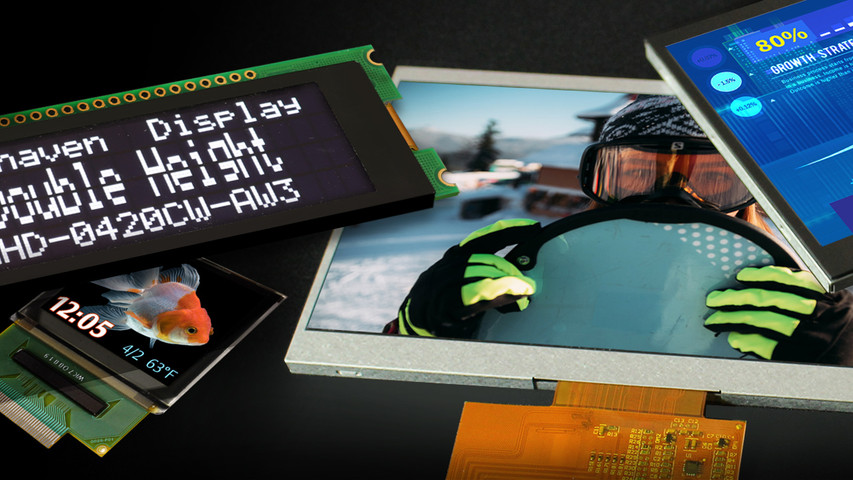
有機ELと液晶の比較
Apr 27th 2021
If you're designing a display application or deciding what type of TV to get, you'll probably have to choose between an OLED or LCD as your display type. OLEDs and LCDs have different strengths and weaknesses you’ll need to consider when choosing the right one for your particular application.
有機ELと液晶。アプリケーションに最適なディスプレイは?
どれが一番いいのかわからない?ご心配なく。あなたのプロジェクトやアプリケーションに最適なディスプレイを見つけるお手伝いをします。この記事では、これらのディスプレイの長所と短所を説明し、あなたに最適なディスプレイを決定できるようにします。
Related: IPS vs OLED Displays
有機ELディスプレイと液晶ディスプレイの違いとは?
The difference between LCDs and OLEDs are how the images are produced. LCDs utilize liquid crystals that produce an image when light is passed through the display. OLED displays generate images by applying electricity to organic materials inside the display.
OLEDとLCDの主な違い。
液晶ディスプレイの場合、画素はバックライトで照らされている。有機ELは、バックライトがなく、各画素が独自に発光する。
これらの技術的アプローチの違いは、コントラスト、輝度、視野角、寿命、黒レベル、画像焼き付き、価格などのいくつかの特性に大きな影響を与える。
有機ELと液晶の主な違いは何ですか?
- コントラスト
- 輝度
- ビューイングアングル
- ライフスパン
- ブラックレベル
- バーンイン
- 価格
Related: Understanding Display Viewing Angles
有機ELと液晶を選ぶ前に考えるべきこと
ディスプレイを使用する環境、予算、照明条件、必要な耐久性など、すべてがこの決断に関係してきます。
それぞれのディスプレイの長所と短所を比較検討し、用途に合ったものを選ぶ必要があります。
コントラスト
コントラストとは、画像の最も明るい部分と最も暗い部分の差のことです。コントラストが高いほど、画像は鮮明になり、文字は読みやすくなります。高精細なグラフィックスや画像、あるいはディスプレイ上のメッセージが非常に見やすくなるようにするために、重要な品質です。
By design, most LCDs will have a built-in backlight to make their graphics and images visible. This is the reason you’re still able to see light coming through on images that are meant to be dark on an LCD monitor, display, or television.
OLEDs by comparison, deliver a drastically higher contrast by dynamically managing their individual pixels. When an image on an OLED display uses the color black, the pixel shuts off completely and renders a much higher contrast than that of LCDs.
OLED vs LCD - コントラストに優れているのはどっち?
For the boldest, sharpest images with high contrast, OLED is better.
Related: IPS vs OLED
輝度
One of the primary differences between OLEDs and LCDs is that LCDs contain an LED backlight, and OLEDs do not. In terms of individual pixel brightness, OLED displays tend to have an advantage because each pixel illuminates individually. This means OLEDs can have more intense brightness at the pixel level, as they are not relying on a separate backlight source. However, if we consider the overall brightness of the entire screen, LCDs often win. This is because LCDs use a constant backlight that illuminates the entire display area, creating an overall brighter image. This also means that LCDs can have more 'wasted' light, as the backlight is always lighting up the whole display, even if only a few pixels need to be lit.
In summary, whether an LCD or an OLED display is brighter can depend on whether you're looking at the brightness of individual pixels or the brightness of the entire screen. In general, OLEDs may have brighter individual pixels, while LCDs can offer a brighter overall display.
OLEDs are self-illuminating, so they have no backlight. This means LCDs are able to produce brighter images due to their powerful backlights.
動画で見る 直射日光下での標準TFT LCDとIPS TFT LCDの比較。
直射日光の当たる場所や、周囲の明るさが高い場所でディスプレイを使用する場合は、輝度レベルが高いことが重要です。屋内や低照度の場所で使用する場合は、ディスプレイの輝度レベルはそれほど重要ではありません。
有機ELと液晶の比較 - 明るさはどちらが上?
For a display that can remain visible in bright conditions and even direct sunlight, LCDs are the best solution.
ビューイングアングル
画面を斜めから見たとき、映像が白っぽくなったり、影ができたりしたことはありませんか?これは、視野角が広いほど、画面に表示される映像がきれいに見えることを表しています。これは視野角の一例で、視野角が広ければ広いほど、さまざまな場所から見たときに画面の映像がきれいに見えるのです。
Having a wide viewing angle is important for displays that you don’t always view straight on. Wide viewing angles allow the images on screen to stay consistent and retain their quality no matter where the viewer is looking at them from.
Like we mentioned in the previous section, OLED displays have no backlight. This means the display is much thinner than LCD displays and their pixels are much closer to the surface of the display, giving them an inherently wider viewing angle.
有機ELディスプレイの画像は、ほぼどの角度から見ても画質や見やすさが保たれています。最も一般的なタイプの液晶ディスプレイはそうではありません。
液晶ディスプレイを傾けたり、角度を変えて見たりすると、画像が歪んだり、色が抜けたりすることがよくあります。しかし、多くの液晶ディスプレイには、これを補正する技術、すなわちIPS(In-Plane Switching)が搭載されています。
IPSを搭載した液晶ディスプレイは、通常の液晶ディスプレイよりも大幅に明るく、視野角も有機ELに匹敵するほど広い。
有機ELと液晶の比較 - 視野角はどっちが上?
In the case of viewing angles, more modern LCDs are able to compete with OLEDS. But when it comes to the standard version of these display types OLEDs offer the best viewing angles.
ライフスパン
液晶は有機ELよりも発売から時間が経っているため、寿命の根拠となるデータが多くあります。液晶ディスプレイは、平均して約6万時間(2,500日)稼働することが実証されています。
多くの液晶ディスプレイでは、7年程度の安定した性能が期待できます。バックライトの減光が見られますが、ディスプレイの品質に大きな影響を与えるものではありません。
有機ELはディスプレイの中では新しい技術であるため、十分に評価することが難しい。有機ELの技術は日進月歩であり、また、その性能を十分に観察する時間もない。
現在の有機ELは、適切にメンテナンスすれば10万時間は安定した性能を発揮すると予測されています。これは、1日10時間、10年間使えるということです。
また、有機ELは画像の焼き付きに弱いことも考慮しなければならない。これらのディスプレイに含まれる有機材料は、静止画像を長時間表示すると、ディスプレイ上に永久的な残像を残す可能性がある。
そのため、有機ELの使い方によっては、寿命に大きな影響を与えることになります。静止画を長時間表示する有機ELと、動きのある動画を表示する有機ELでは、寿命が違ってきます。
有機ELと液晶、どっちが長持ちする?
液晶ディスプレイと有機ELディスプレイの寿命は、まだ明確な勝敗が決まっていない。用途によって、それぞれの良さがあります。同点です。
有機ELと液晶の機能比較表
| 有機EL | 液晶ディスプレイ | |
| コントラスト | ベスト | 良い |
| 輝度 | 良い | ベスト |
| 視野角 | ベスト | 良い |
| ブラックレベル | ベスト | 良い |
| 解像度 | ベスト | ベスト |
| リフレッシュレート | ベスト | ベスト |
| エネルギー消費量 | ベスト | ベスト |
| ライフスパン | ベスト | ベスト |
| バーンイン | 良い | ベスト |
| 価格 | 良い | ベスト |
有機ELディスプレイと液晶ディスプレイ。どっちを選ぶ?
ディスプレイの種類を決める際には、様々なことを考慮する必要があります。このガイドが、あなたの選択を容易にすることを願っています。
LCDを利用する
大型ディスプレイの用途や、最も費用対効果の高いソリューションが必要なプロジェクトには、LCDをお勧めします。
有機ELを利用する。
特に小型・軽量のウェアラブル端末など、最高の色彩、コントラスト、視野角が求められるディスプレイ用途では、有機ELディスプレイをお勧めします。
Still have questions? Connect with us via our support center to talk to one of our experts. We’re always here to help.