


Nits vs Lumens vs Luminance: Key Differences Explained
Nov 21st 2025
While looking at some of the many light-emitting devices, such as televisions, LCDs, or light bulbs, you've probably noticed they're not all the same. Some are dim, while others are very bright, and often times you can even adjust the brightness or luminance settings. Display manufacturers use different units and specifications such as nits, lumens, luminance, brightness, or light output to describe their product's light-emitting properties, so it's essential to understand what they're talking about before making a purchasing decision.
In this article:
Why Understanding Light Measurements Matters in Display Design
Brightness isn’t a one-size-fits-all metric. What looks clear in a dim environment may fade or wash out under direct sunlight. That’s why display performance depends on understanding how light is measured, and how those measurements apply to real-world conditions.
Terms like nits, lumens, and luminance are often used interchangeably, but each serves a different purpose. Knowing the difference between nits vs lumens provides a more accurate path to selecting the right display from the start.
Light Concepts
Before we compare light measuring units, it's essential to understand some concepts:
- Illuminance: The amount of light that hits a surface. (how illuminated that surface is)
- Luminance: The perceived amount of light emitted from an object. Luminance is also referred to as brightness.
- Lumen: The total amount of visible light emitted from a light source. It's the unit to measure luminous flux.
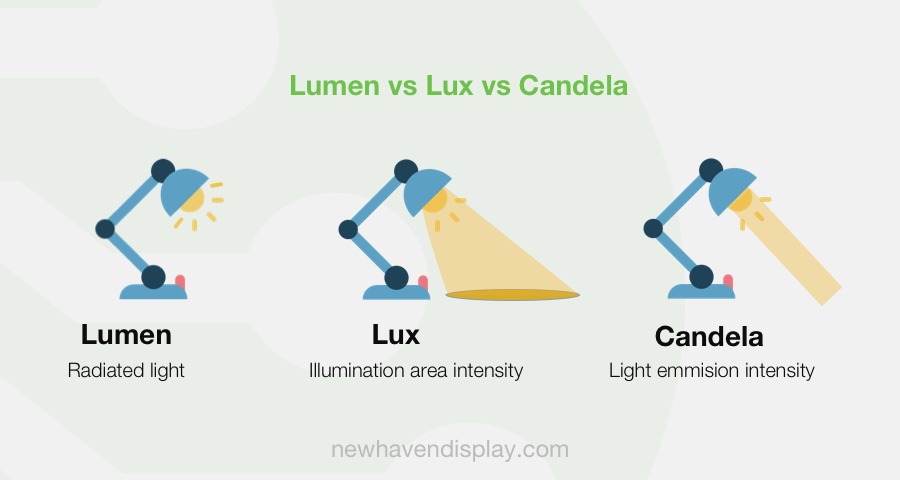
- Luminous Flux (Lux): The amount of light emitted in every direction and measured in lumens.
- Luminous intensity: Amount of visible light emitted from a source in a particular direction per unit solid angle. The candela is the SI unit for luminous intensity.
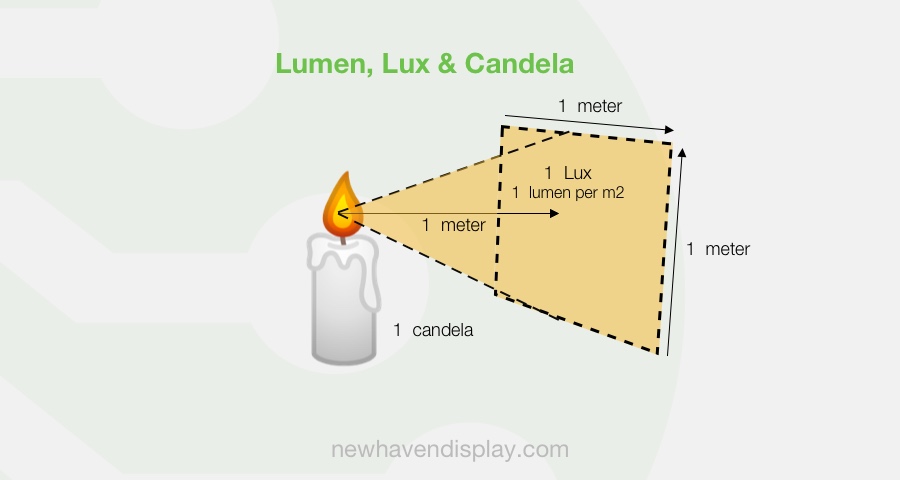
- Candela: The unit measurement for light intensity. A candela measures the amount of luminance intensity from any point in a single direction.
The light from one candle is roughly one candela. Some of the highest candela ratings are seen in spotlights or lasers since most of its light is concentrated in one direction.
Learn more: Types of LCD
Light Measurement Units
We can measure light based on the brightness seen by the human eye. The most common units used to measure light are Lumen, Lux and Candela.
Light International System of Units (SI)
| Name | Symbol | Unit | Unit Symbol |
|---|---|---|---|
| Luminous intensity | lv | Candela | cd |
| Luminance | Lv | Candela per square meter | cd/m² |
| Luminous flux | Φv | lumen | lm |
| Illuminance | Ev | lux | lx |
At Newhaven Display, we use luminance in candelas per square meter or nits to specify the brightness capability of our display products.
Nits
What are Nits? Nits (or NITS) are a measure of luminance, meaning it measures how much light an object emits. The term nit comes from the Latin word nitere, which means "to shine". The nit doesn't officially belong to the International System of Units (SI) or any other measurement system.
One NIT is equivalent to one Candela per square meter. Not only do they represent the same type of quantity, but they’re also equivalent units.
1 nit = 1 candela per square meter.
In simpler terms, nit is just a different name for candela.
Average consumer LCD displays have a luminance of 200 to 350 nits. For LCD displays used outside, 400-700 nits are minimum for use in daylight conditions, and at least 1000 nits to view in bright, direct sunlight. We sell Sunlight Readable displays and IPS displays designed with high-brightness LED backlights for outdoor applications.
How Nits Affect Real-World Display Performance
Nits measure luminance, or the brightness emitted from a display’s surface in a specific direction. This directly impacts how well the screen can be seen in different lighting conditions. A display may appear bright indoors but lose visibility in environments with strong ambient light if the nit level is too low.
For most indoor applications, 250 to 400 nits is usually sufficient. In outdoor or high-glare settings, displays typically require 700 nits or more to maintain legibility. Industrial controls, medical equipment, and automotive interfaces often fall into this higher range.
Newhaven Display offers high-brightness options specifically engineered for these use cases. Our Sunlight Readable TFT and IPS displays are built for visibility in direct light, while providing superior color accuracy and image quality.
Lumens
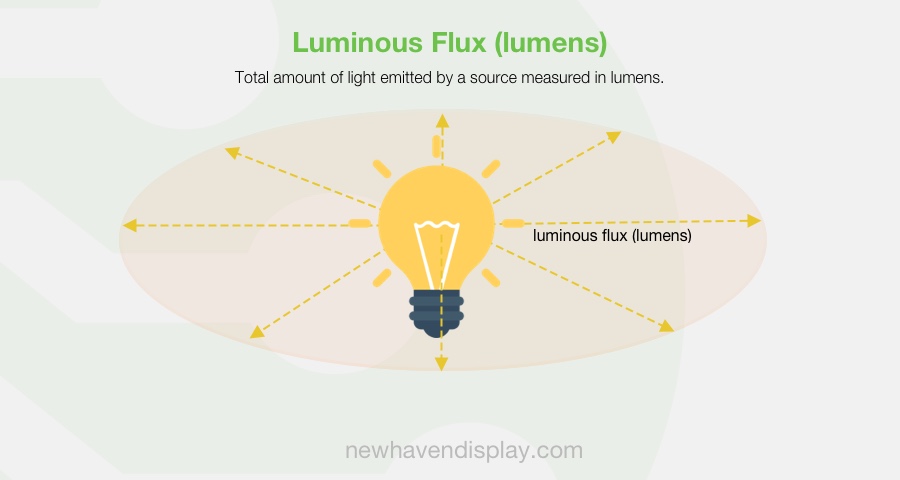
The lumen (lm) is the unit of measurement for luminous flux in the International System of Units (SI). Luminous flux is a measurement of how much light is emitted by a source measured in lumens. Lumens are commonly used in light bulb product specifications to describe how bright the light is. The light output from a projector is also commonly measured in lumens.
Lumens vs candela
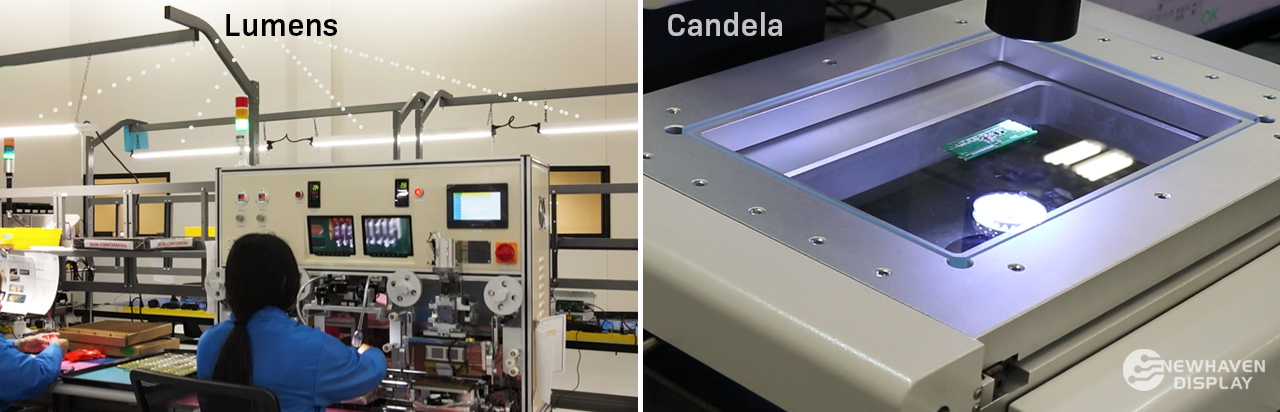
Lumens describe total light output in all directions and candela describes light output or intensity from a specific point in a single direction.
Nits vs Lumens
Although both the Nit and the Lumen are units used to measure light output, the key distinction between the two is that the Nit measures luminance or brightness of an object, and lumens measure how much light is being emitted.
1 Nit is equal to 3.426 lumens.
Candela vs Nits
1 Candela equals 1 Nit. Other than the name, there is no difference between Candela and Nits.
Luminance
Luminance (Lv) measures the amount of light emitted from, reflected, or passed through an object. Luminance is measured in candela per square meter (cd/m²).
Although there are various units of measurement for luminance, including the Nit (nt) and the foot-lambert (fl), the International System of Units (SI) specifies the candela/square meter (cd/m²) as the measuring unit for luminance.

In the display industry, luminance is used to specify the brightness of displays.
Related: Image Burn-in
Misconceptions About Brightness and Display Quality
Brightness is often used as a shorthand for display quality, but that can lead to incorrect assumptions. Here are some common misconceptions:
- Higher brightness always means better visibility: Not always. A display rated at 1000 nits might look washed out if contrast is poor or if glare isn't managed. In some cases, a lower-brightness display with optical enhancements will perform better.
- Boosting nits solves all outdoor readability issues: Brightness is just one piece. Optical bonding, anti-reflective coatings, and panel type (like IPS vs standard TFT) all affect how readable a display is in bright conditions.
- Lumens and nits can be compared directly: Lumens measure total light output from a source. Nits measure how bright a display surface appears to the viewer. These are separate measurements used in different contexts. In displays, nits vs lumens is not an apples-to-apples comparison.
- All high-brightness displays behave the same in the field: Two displays with the same nit rating can still look very different. Factors like color accuracy, viewing angle, and ambient light handling influence real-world performance.
Choosing the Right Brightness for Your Application
Lighting conditions play a major role in display performance. Brightness levels that perform well indoors may not be visible in high-glare outdoor conditions.
- Indoor use: In environments like test stations, lab instruments, or control rooms, 250 to 400 nits is usually sufficient. The goal here is comfort and clarity without unnecessary intensity.
- Mixed lighting or partial sun: For equipment exposed to overhead lights, windows, or indirect sunlight, displays in the 400 to 700 nit range offer improved readability without excessive power draw.
- Direct sunlight or harsh glare: Displays used outside or in high-glare areas need to be at least 700 nits to remain legible. This is common in automotive, marine, and industrial field equipment.
The best starting point is to define the lighting conditions your product will face. From there, select a display that delivers consistent clarity at the lowest required brightness. Newhaven Display provides high-brightness display solutions designed for reliability, clarity, and exacting environmental needs. For projects requiring tailored performance, custom configurations are available to meet specific brightness, interface, or size requirements.
FAQs
What is luminance measured in?
Candela per square meter (cd/m²).
Whats the difference between Luminous flux and luminous intensity?
Luminous flux measures the total amount of light emitted by a light source across its whole angular spectrum. In contrast, luminous intensity measures light emitted by a light source in a given direction.
Whats the difference between Luminance and Illuminance?
Luminance is the amount of light emitted from the source and illuminance is the amount of light that hits a surface.
Is brightness the same as luminance?
Brightness is not the same as luminance and does not have a quantitative measure. Brightness is a perception and is commonly done in percentages.
How to convert nits to lumens?
1 Nit = 3.426 Lumens. To convert nits to lumens simply multiply the number of Nits by 3.426.
How to convert lumens to nits?
Divide the number of Lumens by 3.426.
Conclusion
Understanding the nits, lumens, and luminance specifications is an important factor when choosing light-emitting devices such as LCD screens. However, there are other specifications to consider, such as refresh rate, interface, viewing angle, and resolution. Reach out to one of our engineers today to help you choose the perfect display for your application.