


OLEDs in Wearable Devices
May 17th 2021
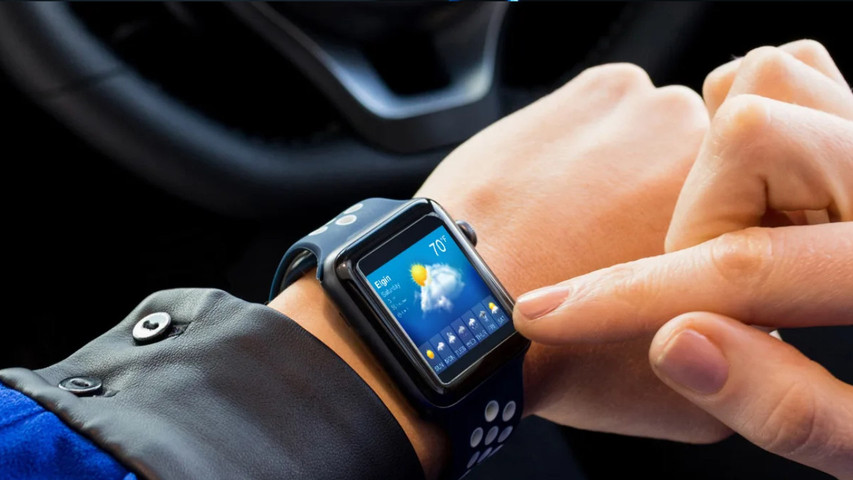
Wearable OLEDs have been leading the wearable and smart tech industries in recent years. There’s a good chance you’re even using (or wearing) one of them right now. Watches, fitness trackers, and even glasses are being upgraded with wearable OLEDs.
Wearable Displays & Smart Technology
It’s a common question: should you use an OLED or LCD for your application? In the case of wearable devices, the answer is almost always going to be OLED.
Related: IPS vs OLED Displays
Developers have used LCDs for wearable tech, but OLEDs continue to dominate the industry for a number of reasons. OLED displays meet and often exceed the demands of wearable applications.
Read on to learn what makes OLEDs so great for wearable devices and smart technology.
Benefits Of Wearable OLEDs
There are several unique qualities that wearable devices need in order to perform well and satisfy users. Things like contrast, weight, profile thickness, and battery life are all important factors. Coincidentally, OLED displays meet all these special requirements and more.
Here’s how OLED displays are a perfect match for wearable devices:
Vivid Images & Wider Viewing Angles
Superior Image Quality With Wearable OLEDs
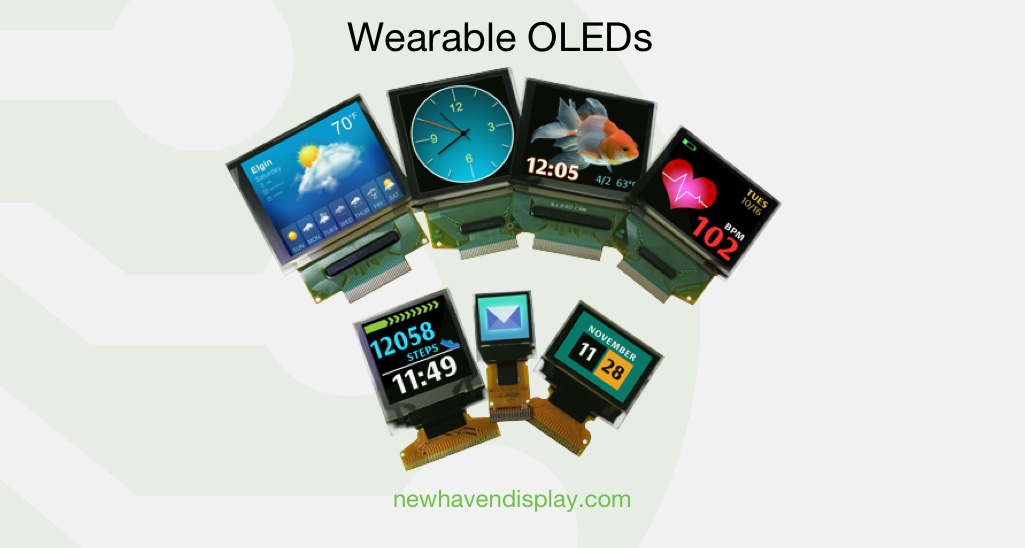
OLEDs deliver vivid, high contrast images that look great from any angle, so they’re easy to read at a glance. This quality makes them the perfect display type to put in a watch or wristband that users quickly view various angles.
Compared to OLEDs, LCD’s can suffer from distorted, washed out colors when viewed at an angle. This makes LCDs harder for users to read when they’re on the move.
Lightweight, Slim Profile, & Elegant Design
OLEDs Allow For More Flexible Design Choices

OLED’s unique self-illuminating properties mean they’re able to light up without a backlight. This allows OLEDs to maintain a thin profile and lightweight form while delivering bold graphics. These design qualities help OLEDs fit into lightweight devices that don’t feel cumbersome to the user.
LCDs need an LED backlight which makes them bulkier, heavier, and can occasionally generate heat. You don’t want any of those things in a wearable device. These constraints make LCDs generally unpleasant to wear for long periods of time, which is why OLEDs are the more popular choice.
Low Power & Energy Efficient
Wearable OLEDs Provide Long-Lasting Performance
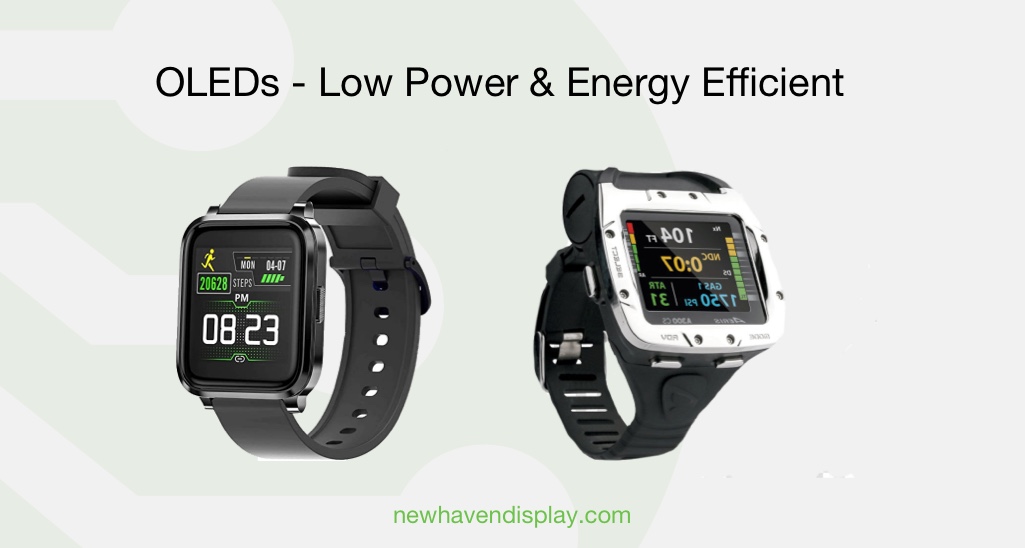
LCDs tend to draw more power than OLED displays because of their LED backlights. OLEDs are able to activate only the pixels that are required for any given image. This means any black areas in a picture will be completely shut off and not draw any power.
Related: Everything You Need to Know About EMI
Compare this to LCDs where there is always a backlight illuminating the images. Dark sections on LCDs are displaying black pixels with a backlight still activated behind them which constantly drains the battery. For a device that that needs to last a long time between chargers it’s important to use energy efficiently.
Wearable OLEDs Are Here To Stay
OLED Displays Remain The Leaders Of Wearable Tech
It’s clear with the widespread success of smartwatches and other wearable devices that this industry will only keep growing. OLED displays quickly dominated this space, and for good reason. They are slim, bright, and energy efficient capabilities make them ideal for any wearable application.
We’ve already developed our own OLED displays and we’re excited to keeping working with this exciting technology.
For questions about OLED displays or display technology, we’re always here to help!