
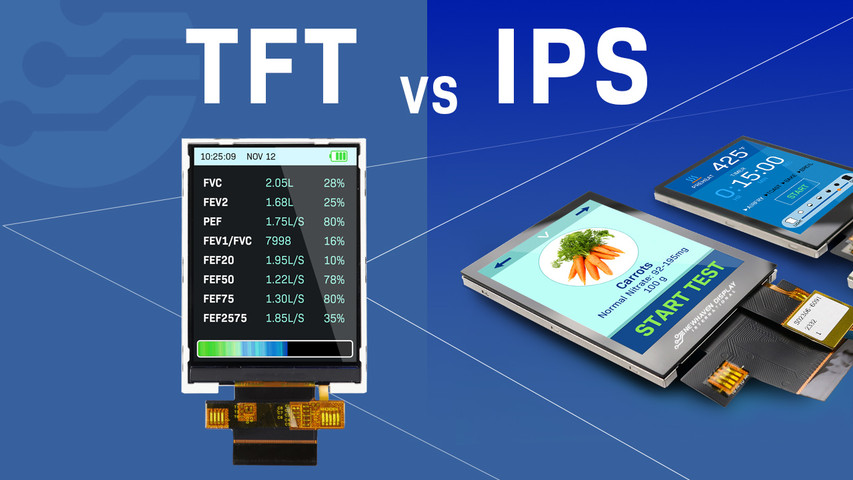
TFT vs IPS: Is There a Difference?
Display specs can be confusing if you're not familiar with the technology behind them. TFT and IPS are often listed side by side, but they're not separate categories. IPS is a type of TFT display that builds on the same core technology.
TFT, or thin-film transistor, is the standard structure behind most active matrix displays. IPS, short for in-plane switching, was introduced to improve consistency in viewing angles and color performance. Knowing how these technologies connect gives engineering teams a better foundation for making informed choices about visual clarity, efficiency, and long-term usability.
In questo articolo:
- Understanding TFT Technology
- Introducing IPS: A Type of TFT
- Standard TFT Displays vs IPS Displays: Key Differences
- When to Use Standard TFT vs IPS
- Common Misconceptions
- Choosing the Right Display for Your Product
Understanding TFT Technology
TFT technology controls each pixel in an LCD through a dedicated transistor. This setup supports fast refresh rates, reliable performance, and accurate color reproduction. It’s widely used across industries that depend on real-time data, responsive interfaces, or compact form factors.
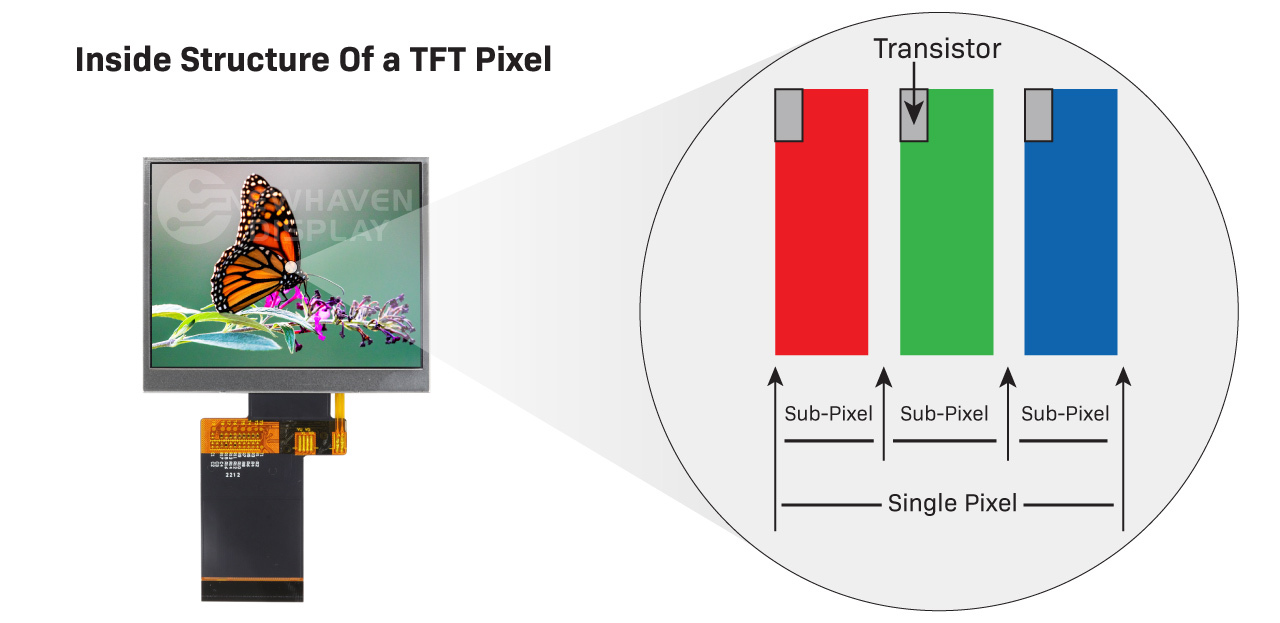
Standard TFT displays offer a strong balance of speed and affordability. They’re commonly found in control panels, diagnostic equipment, and embedded systems where quick screen updates are a priority. While they deliver dependable image quality, these displays typically have narrower viewing angles and less consistent color than newer panel types.
Introducing IPS: A Type of TFT
IPS technology was developed to address some of the visual limitations found in earlier TFT LCDs. It doesn’t replace TFT; it builds on it. The core structure remains the same, but the orientation and movement of the liquid crystals are different.
In standard TFT panels, liquid crystals tilt vertically when voltage is applied. This can lead to uneven light transmission, particularly at wider viewing angles. In an IPS panel, the liquid crystals rotate horizontally in parallel to the display surface. This sideways movement allows for more consistent light flow, which results in better color accuracy and wider viewing angles.
The improvement is noticeable in side-by-side comparisons.
IPS displays maintain brightness and clarity across a broader range of angles, making them ideal for shared screens, compact enclosures, or any product where the display isn’t always viewed head-on.
IPS panels are built on the same TFT foundation. The difference lies in how they manage light and viewing angles, not in how the display is fundamentally structured.
Explore more about different types of LCD technology, including IPS.
Standard TFT Displays vs IPS Displays: Key Differences
 Viewing experience: Standard TFTs tend to lose color accuracy and brightness when viewed from an angle. IPS panels maintain consistent visuals across a wider field of view, which is helpful in devices viewed from multiple positions or shared between users.
 Color consistency: IPS technology supports more stable color reproduction across the entire screen. Standard TFTs may show shifts in tone, especially at the edges or when viewed from the side.
 Refresh behavior: For applications that require quick screen updates, standard TFTs often deliver slightly faster pixel transitions. IPS response times have improved, though they may still be less suited for high-speed changes.
 Power use: Depending on configuration, IPS panels can require higher backlight intensity to attain brightness levels. This may affect power usage in portable or battery-powered devices.
 Cost considerations: Standard TFT displays are typically more cost-effective. For designs where viewing angle and color precision are less important, they offer a straightforward path to production.
Understanding these differences helps teams match display technology to the product’s environment and performance needs.
When to Use Standard TFT vs IPS
Display choice often starts with how the screen fits into the overall product experience. Standard TFTs are a strong fit for applications that run in controlled environments or have predictable viewing angles. Diagnostic tools, handheld meters, and fixed industrial equipment are good examples. These products don’t require off-angle visibility or high color fidelity, so a standard TFT keeps things efficient and cost-effective.
IPS displays are a better match for designs that rely on shared screens, complex visual interfaces, or devices mounted at unusual angles. They're often used in medical displays, consumer electronics, or systems where readability from different positions improves usability.
The right fit isn’t always about specs alone. Consider how users interact with the device, how often it’s in motion, and what role the display plays in the overall function.
Common Misconceptions
- TFT and IPS are separate technologies: IPS is actually a type of TFT. Both use thin-film transistor architecture, but IPS panels adjust the orientation of liquid crystals to improve viewing angles and color consistency.
- IPS is too expensive or difficult to integrate: While IPS used to carry a higher cost, that gap has narrowed. Many IPS panels now fit into mid-range budgets and standard display footprints, making integration more accessible than many teams expect.
- IPS is always the better option: IPS panels offer visual advantages, but standard TFTs still lead in response time and power efficiency in certain use cases. The best option depends on how and where the display will be used.
Choosing the Right Display for Your Product
The decision between standard TFT and IPS often depends on how the display will function in real-world use. If the screen is viewed directly and visual performance is less of a priority, a standard TFT may be the more efficient option. When color accuracy or viewing consistency matters, IPS becomes the better fit.
Other design factors also influence the choice. These include how the display is mounted, the input method, power limitations, and ambient lighting. Each of these plays a role in determining which display type will perform best once the product is in use.
At Newhaven Display, we offer both off-the-shelf and custom display solutions to help align visual performance with product requirements. Our engineering team works closely with customers to tailor the right combination of size, interface, brightness, and format for each design.
If you're weighing TFT vs IPS or looking for a solution that fits your product and environment, we’re ready to help you move forward. Reach out to our sales team to start the conversation or request a quote.

Ultimi post del blog
-

Arduino vs Raspberry Pi vs BeagleBone: Key Features and Differences
If you're working on an electronics project—whether it's for a DIY automated device, a digital sign, …Dec 8th 2025 -
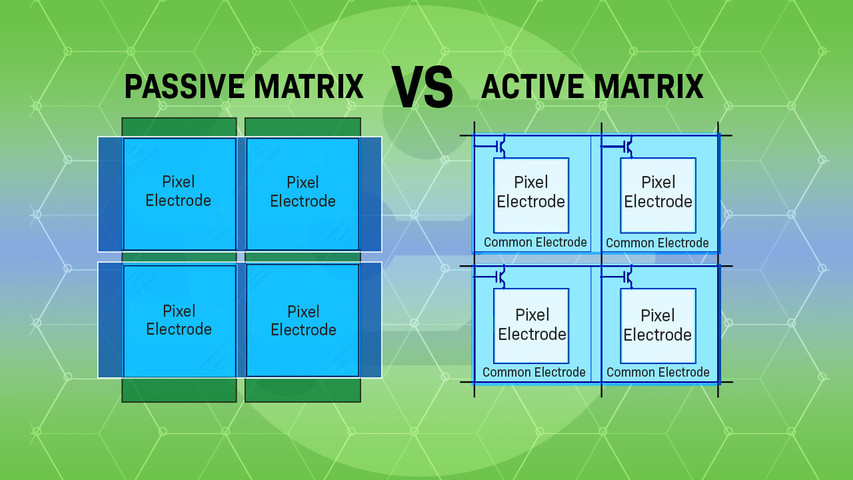
Passive Matrix vs Active Matrix - A Beginner's Guide
Have you ever wondered how display screens are able to produce sharp images and vibrant colors? The …Dec 5th 2025 -
Nits vs Lumens vs Luminance: Key Differences Explained
While looking at some of the many light-emitting devices, such as televisions, LCDs, or light bulbs, …Nov 21st 2025